Kicking off with how to manage emails with ai, this opening paragraph is designed to captivate and engage the readers, setting the tone for a streamlined and efficient approach to your digital correspondence. We will explore the transformative power of artificial intelligence in taming your inbox, moving beyond simple automation to intelligent organization and communication.
This comprehensive guide delves into the core advantages of integrating AI into your email management strategy. From automating repetitive tasks and intelligently triaging your messages to enhancing drafting capabilities and ensuring robust security, discover how AI can fundamentally change your relationship with your inbox, making it a more productive and less overwhelming space.
Understanding the AI Advantage in Email Management
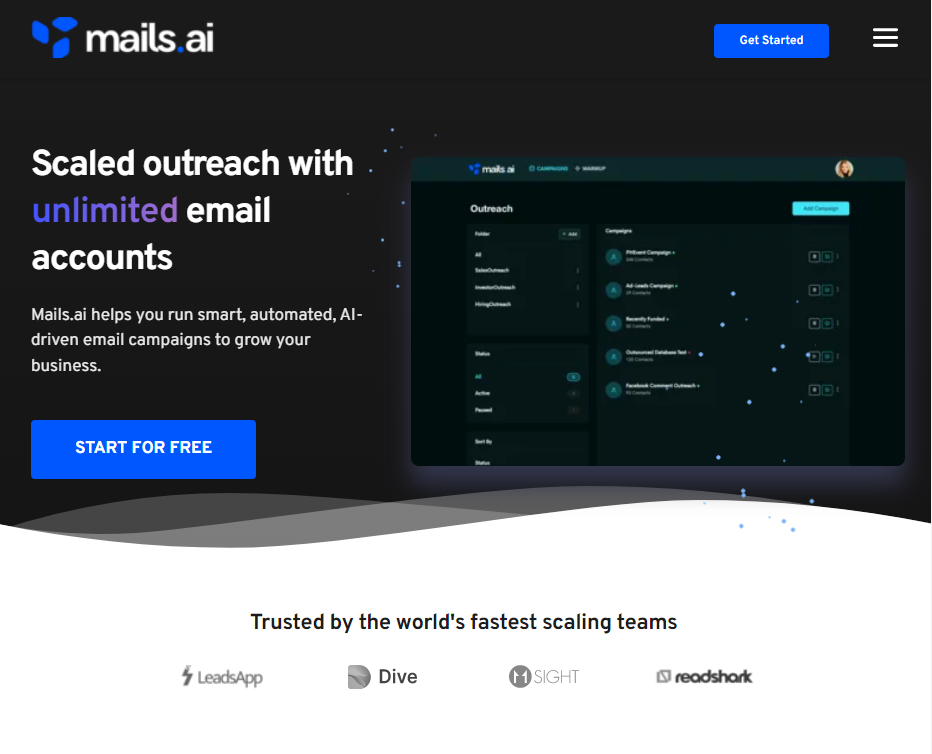
In today’s fast-paced digital world, email remains a primary communication channel, often leading to an overwhelming inbox. Artificial intelligence (AI) offers a transformative solution, revolutionizing how we interact with and manage our electronic correspondence. By leveraging AI, individuals and organizations can reclaim valuable time and mental energy, transforming email from a source of stress into a streamlined, efficient tool.The core benefits of employing artificial intelligence for handling electronic correspondence are multifaceted, primarily revolving around increased efficiency, enhanced organization, and improved decision-making.
AI excels at processing vast amounts of data quickly and accurately, a capability perfectly suited to the demands of modern email management. This allows for a more strategic and less manual approach to dealing with our daily deluge of messages.
Automation of Repetitive Email Tasks
One of the most significant contributions of AI to email management is its ability to automate mundane and repetitive tasks. These are the actions that consume a considerable amount of time without requiring complex cognitive input, freeing up human users for more critical responsibilities. AI algorithms can be trained to recognize patterns and execute predefined actions, significantly reducing manual effort.AI can automate a variety of email tasks, including:
- Sorting and Categorization: AI can intelligently classify incoming emails into predefined folders (e.g., “Urgent,” “Promotions,” “Newsletters,” “Personal”) based on sender, content, s, and historical user behavior. This ensures important messages are easily discoverable.
- Prioritization: By analyzing the urgency and importance of an email, AI can flag or highlight messages that require immediate attention, helping users focus on what truly matters.
- Drafting Responses: For common inquiries or standard replies, AI can generate draft responses, which users can then review, edit, and send, saving considerable typing time.
- Scheduling and Follow-ups: AI can identify action items within emails and automatically suggest or create calendar events or reminders for follow-ups, ensuring no task falls through the cracks.
- Spam and Phishing Detection: Advanced AI models continuously learn and adapt to identify and filter out malicious or unwanted emails with a higher degree of accuracy than traditional methods.
Common AI-Powered Features in Modern Email Clients
Modern email clients are increasingly integrating AI to enhance user experience and productivity. These features are designed to work seamlessly in the background or provide intelligent suggestions to the user.Here are some common AI-powered features found in today’s email platforms:
- Smart Compose: This feature offers predictive text suggestions as you type an email, completing sentences and phrases based on context and common usage. For example, if you start typing “I hope this email finds you,” Smart Compose might suggest “well.”
- Smart Reply: AI analyzes the content of an incoming email and suggests short, contextually relevant replies. For instance, after receiving an email asking “Are you available for a meeting tomorrow?”, Smart Reply might offer options like “Yes,” “No,” or “Let me check.”
- Nudges: AI can remind you to follow up on emails you’ve sent that haven’t received a response, or it can bring back emails you haven’t responded to and that might require your attention.
- Focused Inbox: Many email services now use AI to separate your inbox into “Focused” and “Other” tabs. The “Focused” tab contains emails deemed most important by the AI, while less critical messages are moved to “Other.”
- Intelligent Search: AI enhances search functionality by understanding natural language queries. Instead of needing precise s, you can search for concepts like “emails from John about the Q3 report” and AI will interpret and retrieve relevant messages.
Improving Email Organization and Retrieval
Beyond automating tasks, AI significantly enhances the way emails are organized and retrieved, making it easier to find information when it’s needed. This proactive organization reduces the time spent searching and the frustration of lost or misplaced messages.AI contributes to improved email organization and retrieval through:
- Automated Tagging and Labeling: Similar to categorization, AI can automatically apply relevant tags or labels to emails based on their content, sender, or project association, creating a more granular and searchable organization system.
- Relationship Mapping: AI can identify connections between emails, contacts, and projects, allowing users to see all communications related to a specific topic or person in one place.
- Summarization: For lengthy email threads, AI can generate concise summaries, allowing users to quickly grasp the main points without reading every message, which is invaluable for catching up on long discussions.
- Sentiment Analysis: While less common for basic organization, AI can analyze the sentiment of an email (e.g., positive, negative, neutral), which can inform prioritization and response strategies.
- Intelligent Archiving: AI can learn which emails are no longer actively needed but might be important for future reference and suggest or automatically archive them, keeping the primary inbox clean and manageable.
AI-Driven Email Triage and Prioritization
Embracing AI in email management transforms a potentially overwhelming task into an organized and efficient process. One of the most impactful applications of AI is in the intelligent triage and prioritization of incoming messages, ensuring that your attention is directed where it matters most. This section delves into how AI systems can be designed to understand, categorize, and prioritize your emails, streamlining your workflow and boosting productivity.AI-driven email triage and prioritization leverage sophisticated algorithms to analyze the nuances of communication, moving beyond simple matching to a deeper understanding of message intent and sender importance.
This intelligent system acts as a proactive assistant, filtering the noise and highlighting critical information, thereby saving valuable time and reducing the cognitive load associated with managing a busy inbox.
Message Categorization System Design
To effectively manage incoming emails, an AI system must first be able to accurately categorize them. This involves analyzing various elements of an email to assign it to predefined or dynamically created categories. The design of such a system focuses on robust feature extraction and classification.The AI system analyzes incoming messages by examining several key attributes:
- Sender Information: This includes the sender’s email address, domain, and potentially their historical interaction patterns with the user. Emails from known contacts, VIPs, or specific departments can be automatically grouped.
- Subject Line Analysis: Natural Language Processing (NLP) techniques are employed to understand the intent and topic of the subject line. This allows for categorization based on s, sentiment, and urgency indicators.
- Content Analysis: The body of the email is parsed to extract key entities, topics, and sentiment. This deeper analysis helps in classifying emails into categories such as project updates, customer inquiries, meeting requests, or spam.
A practical example of this system in action would be an AI automatically tagging an email with “Invoice Attached” from “[email protected]” as “Finance” or an email with “Urgent: System Outage” from a known IT contact as “Critical IT Alert.”
Flagging Urgent or Important Emails
Beyond simple categorization, AI excels at identifying emails that demand immediate attention. This is achieved through a combination of rule-based flagging and learned patterns, ensuring that critical communications are not missed.Methods for AI to flag urgent or important emails include:
- and Phrase Detection: The AI is trained to recognize specific words and phrases commonly associated with urgency or importance. Examples include “urgent,” “immediate action required,” “deadline,” “critical,” “escalation,” and “important announcement.”
- Sentiment Analysis: AI can gauge the emotional tone of an email. Negative sentiment in customer feedback or urgent requests for support can be flagged as high priority.
- Sender Reputation and Relationship: Emails from predefined VIP senders or individuals with whom the user has frequent and critical interactions are automatically assigned a higher importance level.
- Contextual Urgency: The AI can analyze the context of a conversation thread. If a previous email in a thread indicated an impending deadline, subsequent replies might be flagged as more urgent.
Consider a scenario where an email subject reads “Project X Launch Delay – Immediate Decision Needed.” An AI system, recognizing “immediate decision needed” and the project name, would likely flag this as highly urgent, potentially even before the user opens their inbox.
Learning User Preferences for Prioritization
The true power of AI in email management lies in its ability to adapt and learn from user behavior. Over time, the AI can refine its prioritization rules based on how the user interacts with different types of emails.The AI learns user preferences through several mechanisms:
- Manual Prioritization Feedback: When a user manually moves an email to a different priority folder (e.g., from “Low Priority” to “High Priority”) or marks it as important/unimportant, the AI records this action as a learning signal.
- Response Time Analysis: The AI can track how quickly a user responds to different types of emails. Faster responses to emails from certain senders or on specific topics indicate higher personal priority.
- Forwarding and Reply Patterns: Observing which emails are frequently forwarded to colleagues or receive detailed replies helps the AI understand what information the user deems significant.
- Time-Based Patterns: The AI can identify patterns in when a user typically addresses certain types of emails, further refining its understanding of their workflow and priorities.
For instance, if a user consistently opens and replies to emails from a specific client within minutes, the AI will learn to elevate emails from that client in the future, even if they don’t contain explicit urgency s. Conversely, if emails from a particular newsletter are consistently ignored or archived without reading, the AI will learn to de-prioritize them.
Workflow for Suggesting Replies or Actions
Once high-priority messages are identified, AI can further enhance efficiency by suggesting appropriate replies or actions, creating a seamless workflow that minimizes manual input.A suggested workflow for AI-driven reply and action prompts includes:
- Identify High-Priority Email: The AI flags an email as urgent or important based on the previously described categorization and prioritization rules.
- Analyze Email Intent and Key Information: The AI parses the email to understand the core request, question, or information being conveyed.
- Generate Reply Suggestions: Based on the analysis, the AI offers one or more pre-written reply templates or specific sentence suggestions. These suggestions can range from simple acknowledgments to more detailed responses, often incorporating information extracted from the email itself.
- Suggest Relevant Actions: Beyond replies, the AI can suggest actions such as scheduling a meeting, creating a task, adding a reminder, or attaching relevant documents from the user’s cloud storage.
- User Review and Customization: The user reviews the AI’s suggestions, selects the most appropriate one, and can then edit or customize it before sending or executing the action.
Imagine receiving an email requesting a specific report. The AI could suggest a reply like: “Thank you for your request. I will prepare the Q3 sales report and send it to you by end of day tomorrow. Please let me know if you require any specific data points.” It might also suggest adding a calendar event for preparing the report.
This proactive assistance significantly speeds up response times for critical communications.
Smart Filtering and Organization with AI
Beyond just prioritizing, AI revolutionizes how we manage our inboxes by intelligently filtering and organizing messages. This proactive approach significantly reduces the cognitive load associated with sifting through a constant stream of communication, allowing users to focus on what truly matters. AI’s ability to learn user preferences and email patterns creates a personalized and efficient email environment.AI employs sophisticated techniques to understand the content, sender, and context of each email, enabling it to make intelligent decisions about where each message should reside.
This goes beyond simple matching, delving into the nuances of language and communication intent.
AI-Powered Email Sorting and Labeling
AI algorithms analyze various email attributes to automatically categorize and file messages. This process involves understanding the subject line, the body content, the sender’s domain, and even the historical interaction patterns with that sender. By recognizing these elements, AI can accurately assign emails to predefined folders or apply relevant labels, creating a highly structured and easily navigable inbox.
- Natural Language Processing (NLP): AI uses NLP to comprehend the semantic meaning of email content. This allows it to identify the core topic of an email, such as a project update, a meeting request, or a customer inquiry, and route it accordingly. For instance, an email discussing “Q3 sales figures” might be automatically tagged with “Sales” and filed under a “Reports” folder.
- Machine Learning (ML) for Pattern Recognition: ML models learn from user behavior. If a user consistently moves emails from a specific sender to a particular folder, the AI will eventually learn this pattern and automate the process. This continuous learning ensures the sorting becomes increasingly accurate over time.
- Sender and Domain Analysis: AI can identify trusted senders or domains and associate them with specific categories. Emails from internal company departments might be automatically routed to a “Work” folder, while newsletters from subscribed services could be directed to a “Subscriptions” folder.
- Contextual Awareness: AI can consider the context of an email within a thread. If an email is a reply to an existing conversation, AI can associate it with the original thread’s category or folder, maintaining continuity.
Effective Spam and Promotional Content Management
One of the most immediate benefits of AI in email management is its prowess in identifying and isolating unwanted messages. AI’s advanced detection capabilities far surpass traditional rule-based filters, significantly reducing the volume of spam and promotional content that reaches the primary inbox.
- Behavioral Analysis: AI can detect anomalies in sender behavior that are characteristic of spam. This includes sudden spikes in sending volume, unusual link patterns, or suspicious attachment types.
- Content and Linguistic Analysis: AI analyzes the language used in emails for phishing attempts, deceptive marketing tactics, or generic, unsolicited content. It can identify common spam phrases, grammatical errors, or requests for sensitive information.
- Reputation Scoring: AI systems often maintain a reputation score for senders and IP addresses. Emails from entities with a low reputation score are more likely to be flagged as spam.
- User Feedback Loop: AI models continuously improve by learning from user actions. When a user marks an email as spam or not spam, the AI incorporates this feedback to refine its detection algorithms.
- Promotional Content Categorization: Beyond outright spam, AI can distinguish between genuinely useful promotional emails and intrusive advertisements. It can learn which promotional emails users engage with and which they ignore, allowing for smarter filtering of marketing communications. For example, an AI might learn that a user frequently opens emails from a specific online retailer for sales notifications but ignores generic advertisements from other brands.
Intelligent Archiving and Deletion Strategies
AI can assist in maintaining a lean inbox by intelligently identifying and managing less critical messages. This involves setting automated rules for archiving or deleting emails that have passed their relevance or are unlikely to require future action, thereby reducing clutter and improving searchability.
- Time-Based Archiving: AI can learn user habits regarding email follow-up. If an email thread has been inactive for a certain period and no further action is anticipated, AI can suggest archiving it. For instance, a resolved customer support ticket that hasn’t been reopened for two weeks could be automatically archived.
- Low-Engagement Email Identification: AI can analyze which emails users consistently open, read, or act upon. Messages that are rarely opened or interacted with, and are not from critical senders, can be flagged for potential archiving or deletion.
- Automated Archiving of Routine Communications: Certain types of routine communications, such as delivery notifications for past orders or system-generated alerts that have already been acknowledged, can be identified by AI and automatically archived after a set period.
- Contextual Deletion Suggestions: In some advanced systems, AI might even suggest deleting entire threads that are no longer relevant, based on project completion or the absence of recent activity from key participants.
AI’s role in reducing inbox clutter is multifaceted, moving beyond simple sorting to proactive management. By understanding the content, context, and user behavior, AI creates a more organized, efficient, and less overwhelming email experience. This intelligent filtering and organization ensures that users spend less time managing their inbox and more time engaging with meaningful communications.
AI for Efficient Email Drafting and Response
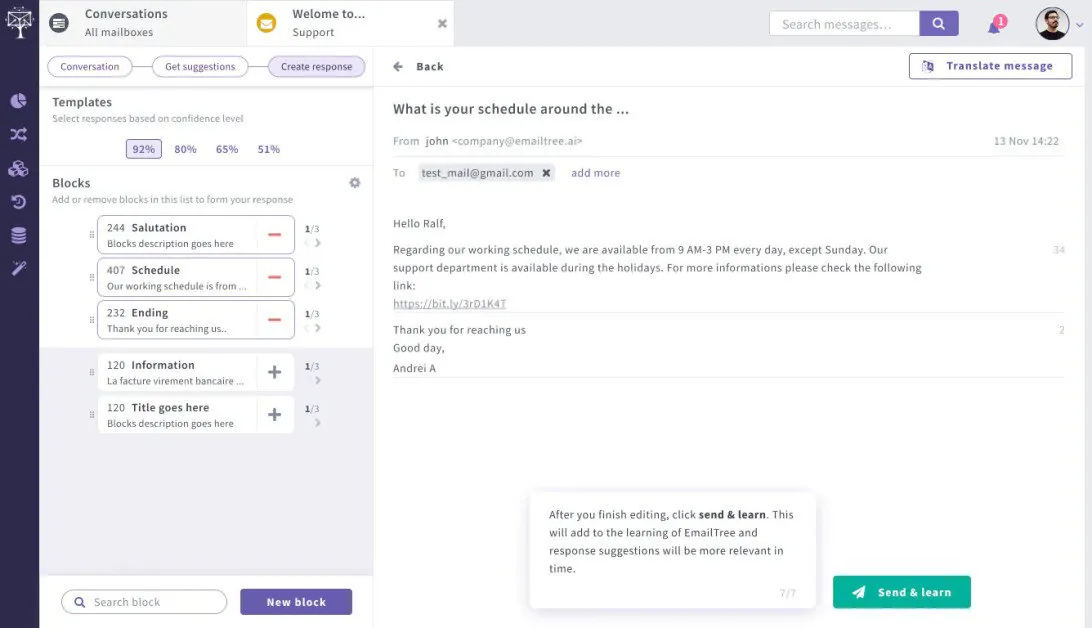
Beyond organizing and prioritizing, Artificial Intelligence is revolutionizing how we compose and reply to emails, transforming a time-consuming task into a more streamlined and effective process. AI-powered tools can significantly enhance the quality and speed of your written communication, ensuring professionalism and clarity in every message.AI’s assistance in email drafting and response centers on understanding context, tone, and the specific information required.
By analyzing your previous communications and the content of incoming emails, AI can offer intelligent suggestions that save you time and improve the impact of your messages. This technology acts as a sophisticated assistant, helping you craft responses that are not only timely but also perfectly tailored to the situation.
AI-Assisted Email Composition
AI can significantly aid in composing professional and concise email responses by suggesting phrasing, correcting grammar and syntax, and even adapting the tone to match the recipient and the context. It can learn your writing style and apply it consistently, ensuring your professional image is maintained across all communications. This capability is invaluable for busy professionals who need to maintain a high volume of correspondence without sacrificing quality.
AI-Generated Email Subject Lines
Crafting an effective subject line is crucial for ensuring your email is opened and understood promptly. AI excels at generating clear, concise, and impactful subject lines that accurately reflect the email’s content. These AI-generated subject lines can help improve open rates and reduce the likelihood of emails being miscategorized or ignored.For example, if you are replying to a customer inquiry about a product update, AI might suggest subject lines such as:
- “Re: Product Update Inquiry – Your Question Answered”
- “Update on [Product Name]
-Information You Requested” - “Your Inquiry About [Product Name] Features – Resolved”
These examples demonstrate how AI can incorporate key information for immediate clarity and relevance.
AI Suggestions for Relevant Information and Attachments
A key strength of AI in email management is its ability to anticipate your needs when drafting a response. By analyzing the content of the incoming email and your past interactions, AI can suggest relevant information, documents, or previous email threads that should be included in your reply. This proactive assistance ensures you don’t miss crucial details or forget to attach necessary files.Consider a scenario where a colleague asks for a project status report.
AI might prompt you with:
- “It looks like the Q3 Project Status Report is relevant to this request. Would you like to attach it?”
- “Here is a link to the shared document containing the latest project updates.”
- “You recently discussed this topic with [Another Colleague]. Would you like to include their insights in your reply?”
These intelligent prompts streamline the response process and enhance the thoroughness of your communication.
AI Summarization of Long Email Threads
Navigating lengthy email chains can be a significant drain on time and mental energy. AI offers a powerful solution by providing concise summaries of long email threads, allowing you to quickly grasp the main points, decisions, and action items without reading every single message. This feature is particularly beneficial when joining a new conversation or catching up on emails after being away.AI summarization tools analyze the entire thread, identify key contributions, and synthesize them into an easily digestible format.
This might look like:
“The core issue discussed is the delayed launch of Project X. Key concerns raised include resource allocation and potential market competition. A decision was made to form a task force to address these challenges, with a preliminary report due by Friday.”
This summary allows for rapid comprehension and informed decision-making, saving valuable time.
Implementing AI Tools for Personal Email Management

Integrating artificial intelligence into your personal email workflow can significantly enhance efficiency and reduce the cognitive load associated with managing your inbox. This section guides you through the practical steps of adopting AI-powered solutions, from initial setup to fine-tuning for optimal performance. By leveraging these tools, you can transform your email experience from a chore into a streamlined process.AI tools for email management can be broadly categorized based on their primary function, offering a range of solutions to address different aspects of your inbox.
Understanding these categories will help you choose the tools that best align with your personal needs and existing email setup.
Integrating AI into Your Existing Email Setup
Embarking on the journey of AI-enhanced email management involves a structured approach to ensure a smooth transition. This step-by-step guide will walk you through the process, from selecting the right tools to seamlessly incorporating them into your daily routine.
- Assess Your Current Email Habits: Before introducing AI, take stock of how you currently manage your emails. Identify your biggest pain points, such as overwhelming volume, difficulty prioritizing, or time spent drafting responses. This self-assessment will help you pinpoint the AI features that will provide the most value.
- Research and Select AI Tools: Based on your assessment, explore the available AI-powered email management tools. Consider factors like compatibility with your current email provider (Gmail, Outlook, etc.), the specific features offered, user reviews, and pricing models.
- Install and Connect: Follow the installation instructions provided by the chosen AI tool. This typically involves granting necessary permissions to access your email account. For most tools, this is a straightforward process requiring authentication through your email provider.
- Initial Configuration and Training: Once installed, most AI tools will require some initial setup. This might involve categorizing a few emails to help the AI learn your preferences or setting specific rules for filtering and prioritization. Be patient during this phase, as the AI learns and adapts to your unique email patterns.
- Gradual Adoption and Monitoring: Begin by using the AI tool for a few specific tasks, such as sorting your inbox or drafting replies. Monitor its performance closely and make adjustments as needed. As you become more comfortable, gradually expand its use to other aspects of your email management.
- Regular Review and Refinement: Periodically review the AI’s performance and your settings. As your email habits evolve, you may need to update the AI’s configurations or explore new features to maintain optimal efficiency.
Types of AI-Powered Email Management Tools
The landscape of AI-powered email management tools is diverse, with each category offering unique benefits to streamline your inbox. Understanding these distinctions empowers you to select the most suitable solutions for your personal workflow.
- AI-Powered Inbox Organizers: These tools focus on automatically sorting, categorizing, and prioritizing your emails. They learn your reading habits and the importance of different senders to ensure critical messages are at the forefront. Examples include tools that automatically move newsletters to a separate folder or flag emails from your manager.
- Smart Reply and Drafting Assistants: Designed to save you time on writing, these tools suggest quick replies or even help draft complete emails based on the context of the incoming message. They can learn your tone and common phrases to generate personalized responses.
- Automated Scheduling and Follow-up Tools: Some AI solutions can help manage your email communication by scheduling emails to be sent at optimal times or automatically sending follow-up reminders for unanswered messages. This is particularly useful for professional communication and task management.
- Spam and Phishing Detection Enhancements: While most email providers have built-in spam filters, AI can further refine this by learning more sophisticated patterns of malicious emails, offering an extra layer of security and reducing inbox clutter.
- AI-Powered Search and Summarization: These tools go beyond basic search to understand the intent behind your queries, helping you find specific information within your emails more effectively. Some can also provide concise summaries of long email threads.
Configuring AI Settings for Optimal Performance
Achieving peak performance from your AI email management tools hinges on thoughtful configuration. Tailoring the AI’s settings to your specific needs ensures it accurately reflects your priorities and preferences, leading to a more efficient and less intrusive experience.
- Define Priority Senders and Categories: Explicitly tell the AI which senders are most important (e.g., family, key colleagues) and how you prefer to categorize different types of emails (e.g., work, personal, subscriptions). Many tools allow you to create custom rules for this.
- Set Notification Preferences: Customize how and when you receive notifications. You might want immediate alerts for urgent emails but less frequent notifications for less critical ones. AI can help learn which emails warrant immediate attention.
- Train the AI on Your Response Style: For drafting assistants, actively use the suggested replies and edit them to match your personal tone. The more you interact, the better the AI will become at generating responses that sound like you.
- Establish Rules for Automation: If your AI tool offers automation features, such as archiving or labeling, set clear rules. For example, you might automate archiving of all emails from a specific newsletter after reading them.
- Regularly Review and Adjust Filters: Periodically check how the AI is filtering and organizing your emails. If you notice miscategorizations or important emails being missed, adjust the settings or provide feedback to the AI to correct its learning.
- Utilize Feedback Mechanisms: Most AI tools have feedback options (e.g., “mark as important,” “not spam”). Use these consistently to guide the AI’s learning process and improve its accuracy over time.
Demonstration of AI-Scheduled Email Delivery
The ability to schedule emails for later delivery is a powerful feature that AI tools can significantly enhance, allowing for more strategic communication and better time management. This capability ensures your messages arrive when they are most likely to be seen and acted upon, or simply to maintain a consistent communication cadence.Imagine you have drafted an important email to a colleague on a Friday afternoon, but you know they are less likely to respond over the weekend.
Instead of sending it immediately and potentially having it get buried by Monday morning, you can use an AI tool to schedule its delivery.The process typically involves drafting your email as usual within your email client or the AI tool’s interface. Once the email is ready, you would look for an option such as “Schedule Send,” “Send Later,” or a similar command, often represented by a clock icon.
Upon clicking this, a calendar or time selection interface appears.Here, you can choose a specific date and time for the email to be sent. For instance, you might select Monday morning at 9:00 AM. Some advanced AI tools might even offer intelligent scheduling suggestions. For example, the AI could analyze the recipient’s typical online activity patterns or your own past sending habits to recommend the optimal time for maximum engagement.For example, if the AI has learned that your recipient is most active and responsive on Tuesdays between 10:00 AM and 11:00 AM, it might suggest scheduling the email for that specific window.
This intelligent suggestion moves beyond simple time selection to a more data-driven approach to email delivery.Once scheduled, the email is held by your email provider or the AI service and automatically sent at the designated time. This feature is invaluable for:
- Maintaining Professionalism: Sending emails during business hours, even if drafted outside of them, ensures a professional image.
- Improving Response Rates: Delivering messages when recipients are most likely to be attentive can increase the chances of a timely response.
- Managing Workload: Batching email drafting and scheduling them for staggered delivery can help manage your daily workload more effectively.
- International Communication: Easily sending emails to recipients in different time zones without manual calculation.
By leveraging AI for scheduling, you transform email from an immediate action into a strategic communication tool, ensuring your messages have the greatest impact.
Advanced AI Applications in Email Communication

Beyond basic organization and drafting, Artificial Intelligence is now unlocking sophisticated capabilities in email communication. These advancements are transforming how we interact with our inboxes, moving towards a more intuitive, secure, and action-oriented experience. AI’s ability to understand nuance, protect sensitive information, and proactively manage workflows is setting a new standard for email efficiency.AI’s growing influence in email communication stems from its capacity to process vast amounts of data and identify complex patterns that are often imperceptible to humans.
This enables functionalities that were once considered science fiction, making our digital interactions more intelligent and less burdensome.
AI-Powered Sentiment Analysis in Emails
Understanding the emotional tone and underlying sentiment of an email is crucial for effective communication and relationship management. AI excels at dissecting text to identify the emotional state of the sender, which can inform the urgency and approach of a response. This capability is invaluable in customer service, sales, and internal team dynamics.AI models are trained on extensive datasets of text annotated with sentiment labels (e.g., positive, negative, neutral, urgent, frustrated).
Through natural language processing (NLP) techniques, these models can identify s, phrases, and even subtle linguistic cues that indicate sentiment. For instance, an AI can differentiate between a polite request and an urgent demand based on word choice, punctuation, and sentence structure.AI sentiment analysis can be applied in several key areas:
- Customer Feedback Analysis: Automatically categorize customer emails to gauge overall satisfaction, identify common complaints, and highlight urgent issues requiring immediate attention.
- Sales Prospecting: Analyze inbound inquiries to understand a prospect’s interest level and potential concerns, allowing sales teams to tailor their outreach more effectively.
- Internal Communications: Monitor team morale by analyzing internal email exchanges (with appropriate privacy considerations) to identify potential stressors or areas of conflict.
- Brand Monitoring: Track mentions of a brand or product in emails to understand public perception and identify potential PR crises or opportunities.
AI for Enhanced Email Data Privacy and Security
In an era of increasing cyber threats and data breaches, AI plays a pivotal role in fortifying email security and ensuring data privacy. AI algorithms can detect anomalies, identify malicious patterns, and proactively safeguard sensitive information within email communications. This goes beyond traditional spam filters to offer a more intelligent and adaptive defense.AI contributes to email security through various mechanisms:
- Advanced Threat Detection: AI can identify sophisticated phishing attempts, malware, and other cyber threats that might bypass conventional security measures. It learns from new attack vectors in real-time, adapting its defenses.
- Data Loss Prevention (DLP): AI can be configured to recognize and flag sensitive data, such as credit card numbers, social security numbers, or proprietary information, within outgoing emails. This prevents accidental or intentional data leaks.
- Behavioral Analysis: AI can establish baseline user behavior patterns and flag any unusual activity, such as an employee sending an unusually large volume of emails to an external address, which could indicate a security risk.
- Content Encryption and Access Control: AI can automate the encryption of sensitive emails and manage access permissions based on the content and recipient, ensuring that only authorized individuals can view confidential information.
AI Framework for Identifying and Suggesting Follow-Up Actions
Managing an inbox often involves a multitude of tasks and commitments that require follow-up. AI can transform this process by intelligently identifying pending actions within emails and suggesting appropriate next steps, thereby streamlining task management and reducing the chance of missed deadlines.A framework for AI-driven follow-up action identification involves several stages:
- Actionable Item Recognition: AI algorithms, using NLP, are trained to recognize verbs and phrases that indicate a required action. This includes requests for information, commitments to tasks, or deadlines. For example, phrases like “Please send me…”, “I will get back to you by…”, or “Could you confirm…”.
- Contextual Understanding: The AI analyzes the surrounding text to understand the context of the action. This includes identifying the sender, recipient, relevant project or topic, and any associated deadlines mentioned.
- Action Categorization: Identified actions are categorized into types such as “To Do,” “Information Required,” “Meeting Scheduled,” “Pending Approval,” or “Follow-Up Needed.”
- Automated Task Creation: Based on the recognized action and its context, the AI can automatically create tasks in a to-do list or calendar, pre-populated with relevant details from the email.
- Response Suggestion: For certain types of follow-up, AI can even suggest draft responses or templates, further accelerating the action. For instance, if an email requests a confirmation, the AI might suggest a simple “Confirmed” response.
AI for Managing Large Volumes of Communication
For individuals and organizations dealing with an overwhelming influx of emails, AI offers a powerful solution for managing high volumes of communication efficiently. AI can automate routine tasks, intelligently filter noise, and surface critical information, making it possible to stay on top of even the busiest inboxes.Consider a scenario where a customer support team receives thousands of emails daily. Without AI, manually sorting, prioritizing, and responding to these emails would be an insurmountable task, leading to delayed responses and customer dissatisfaction.AI’s contribution to managing large volumes includes:
- Automated Routing and Categorization: AI can instantly classify incoming emails based on their content, sender, or s, routing them to the appropriate department or individual. For example, emails mentioning “billing issue” could be automatically sent to the finance department.
- Intelligent Summarization: For lengthy email threads, AI can generate concise summaries, allowing users to quickly grasp the key points without reading the entire conversation. This is particularly useful for project updates or complex discussions.
- Automated Responses to FAQs: AI can identify frequently asked questions and provide automated, accurate responses, freeing up human agents to handle more complex inquiries.
- Prioritization of Urgent Communications: By analyzing sentiment, s, and sender importance, AI can flag and prioritize emails that require immediate attention, ensuring critical messages are not overlooked.
- Predictive Analytics for Workload Management: AI can analyze historical email volume and patterns to predict future workloads, allowing teams to allocate resources more effectively and proactively manage staffing needs.
Structuring AI-Enhanced Email Workflows
The integration of Artificial Intelligence into email management extends beyond simple filtering and drafting. It allows for the creation of sophisticated, automated workflows that streamline daily operations and significantly boost efficiency. By strategically structuring how AI assists in handling your inbox, you can transform email from a potential bottleneck into a powerful communication tool. This section explores how to design these enhanced workflows, focusing on the practical application of AI features and best practices for daily integration.AI’s ability to learn, adapt, and automate repetitive tasks is fundamental to building effective email workflows.
It moves beyond reactive management to proactive organization and communication, freeing up valuable time and cognitive load. Understanding the specific benefits of various AI features and implementing them consistently is key to unlocking their full potential in managing your email correspondence.
AI Features and Email Management Benefits
To effectively structure AI-enhanced email workflows, it’s beneficial to understand the direct correlation between specific AI capabilities and the tangible improvements they bring to email management. This understanding allows for targeted implementation and maximization of AI’s impact.
| AI Feature | Email Management Benefit | Example Application |
|---|---|---|
| Natural Language Processing (NLP) for Sentiment Analysis | Identifies urgency and emotional tone in emails, enabling faster response to critical or sensitive messages. | Flagging emails with negative sentiment for immediate attention, or identifying positive feedback for acknowledgment. |
| Machine Learning for Pattern Recognition | Learns user preferences for sorting, labeling, and prioritizing emails, reducing manual effort. | Automatically categorizing newsletters, promotional offers, and important client communications based on past user actions. |
| Predictive Text and Smart Reply Generation | Speeds up response times by suggesting relevant replies or completing sentences, reducing typing effort. | Offering pre-written responses like “Thank you for your email,” or suggesting a concise answer to a common question. |
| AI-Powered Scheduling Assistants | Analyzes email content to suggest optimal meeting times and even book appointments, minimizing back-and-forth coordination. | Identifying a request for a meeting and proposing available slots based on calendar integration. |
| Automated Summarization | Condenses long email threads or documents into concise summaries, saving time on reading and comprehension. | Providing a brief overview of a lengthy project update email, highlighting key decisions and action items. |
Best Practices for Leveraging AI in Daily Email Routines
Integrating AI tools effectively into your daily email habits requires a strategic approach. Adhering to certain best practices ensures that you harness AI’s capabilities to their fullest, leading to a more organized and productive email experience. These practices are designed to foster a symbiotic relationship between your manual efforts and AI automation.Before adopting new AI-driven routines, consider how these practices will fit into your existing workflow.
The goal is to enhance, not disrupt, your daily communication habits. The following points offer guidance on how to best utilize AI features for consistent improvement in email management.
- Consistent Training: Regularly review and correct AI-generated suggestions or categorizations. The more feedback you provide, the more accurate and personalized the AI becomes.
- Prioritize High-Impact Tasks: Focus AI automation on the most time-consuming or repetitive aspects of your email management, such as sorting, initial filtering, and drafting routine responses.
- Set Clear Rules and Preferences: Define specific rules for AI-driven actions, such as how to handle specific senders, s, or subject lines, ensuring alignment with your organizational needs.
- Utilize Smart Folders and Labels: Leverage AI’s ability to create and manage dynamic folders or labels based on content, sender, or urgency to keep your inbox clean and organized.
- Regularly Review AI Performance: Periodically assess how well the AI is performing its tasks. Adjust settings or provide additional training as needed to maintain optimal efficiency.
- Combine AI with Manual Oversight: While AI can automate much, human judgment remains crucial for complex or sensitive communications. Use AI as a powerful assistant, not a complete replacement for your decision-making.
- Explore Advanced Features: Don’t hesitate to experiment with more advanced AI functionalities like sentiment analysis, predictive scheduling, and automated summarization to uncover new ways to save time.
Procedure for Setting Up Automated Email Responses Using AI
Automated email responses, powered by AI, can significantly reduce the time spent on acknowledging receipt, providing standard information, or managing out-of-office replies. Setting these up effectively involves defining triggers, content, and response logic. This procedure Artikels the steps to implement such a system, ensuring it aligns with your communication standards and provides a positive recipient experience.The setup process typically involves configuring settings within your email client or a dedicated AI-powered email management tool.
The following steps will guide you through creating robust and intelligent automated responses.
- Identify Response Scenarios: Determine which types of emails are suitable for automated responses. Common scenarios include acknowledging receipt of inquiries, providing links to FAQs, confirming appointments, or managing out-of-office notifications.
- Select AI Tool or Feature: Choose an email client with built-in AI response capabilities or a third-party AI tool that integrates with your email. Look for features that allow for customization and learning.
- Define Triggers: Set specific conditions that will activate the automated response. This can be based on sender, subject line s, email content, or time of day. For example, any email with “support request” in the subject could trigger a specific response.
- Craft Response Content: Write clear, concise, and helpful response messages. AI can assist in generating initial drafts or suggesting variations. Ensure the tone is appropriate for your brand or personal communication style.
- Configure AI Logic (if applicable): For more advanced systems, you might set up AI logic to determine the best response based on the sentiment or intent detected in the incoming email. For instance, a highly urgent email might receive a different automated acknowledgment than a general inquiry.
- Set Response Frequency and Exclusions: Decide how often the automated response should be sent to the same sender to avoid overwhelming them. Also, identify specific senders or email addresses that should bypass the automation (e.g., internal colleagues, VIP clients).
- Test Thoroughly: Before fully deploying, send test emails to your configured triggers to ensure the automation works as expected and the responses are accurate and well-formatted.
- Monitor and Refine: Regularly review the performance of your automated responses. Check for any errors, unintended consequences, or opportunities for improvement. Adjust triggers, content, or logic as needed based on incoming emails and recipient feedback.
Comparative Analysis of AI’s Impact on Productivity Versus Manual Methods
The adoption of AI in email management presents a clear contrast in terms of efficiency and output when compared to traditional, manual approaches. This analysis highlights the quantifiable benefits AI brings to productivity, demonstrating its value in streamlining communication workflows. By understanding these differences, organizations and individuals can make informed decisions about AI integration.The following table illustrates the significant improvements in time savings, accuracy, and overall output that can be achieved through AI-driven email management compared to relying solely on manual processes.
| Metric | Manual Email Management | AI-Enhanced Email Management | AI Advantage |
|---|---|---|---|
| Time Spent on Sorting/Categorization | High (average 15-30 minutes daily) | Low (average 2-5 minutes daily) | Reduces time by 70-85% through automated filtering and labeling. |
| Response Time for Standard Inquiries | Moderate to High (minutes to hours) | Very Low (seconds to minutes for acknowledgment, minutes for AI-assisted drafting) | Enables near-instantaneous acknowledgments and significantly faster drafting of replies. |
| Accuracy in Prioritization | Variable (dependent on user focus and experience) | High (consistent based on learned patterns and rules) | Minimizes missed urgent emails and ensures focus on critical communications. |
| Drafting Efficiency | Moderate (requires full typing and composition) | High (utilizes smart replies, predictive text, and AI-generated drafts) | Speeds up writing process by 30-50% through intelligent suggestions. |
| Information Overload Management | Challenging (requires constant effort to keep inbox manageable) | Effective (AI summarizes, filters, and organizes content) | Transforms a potentially overwhelming inbox into a structured and actionable list. |
| Overall Daily Productivity | Limited by time spent on email | Significantly Increased (frees up time for core tasks) | Estimates suggest a 20-40% increase in overall daily productivity by reducing email overhead. |
Closure
In summary, embracing AI for email management is not just about staying current; it’s about unlocking unprecedented levels of efficiency and control. By understanding and implementing the AI-driven techniques discussed, you can transform your inbox from a source of stress into a powerful tool for productivity and effective communication, allowing you to focus on what truly matters.