Unlocking innovative ideas is crucial in today’s dynamic world. This guide delves into the exciting potential of AI-powered brainstorming, exploring how these powerful tools can enhance creativity and accelerate the ideation process. From basic definitions to advanced techniques, we’ll explore the multifaceted ways AI can support your brainstorming efforts.
This comprehensive guide will cover the fundamentals of brainstorming, emphasizing the role of AI in generating, refining, and collaborating on ideas. We’ll discuss various AI algorithms and platforms, along with practical examples to illustrate their application across diverse fields. We’ll also address potential challenges and limitations, providing actionable strategies to mitigate them.
Introduction to Brainstorming with AI
Brainstorming is a creative problem-solving technique that encourages the generation of a large number of ideas in a short period. Its purpose is to explore diverse perspectives and potential solutions, fostering innovation and creativity. Traditionally, brainstorming relies on human interaction and often involves groups generating ideas in a collaborative environment. However, AI can significantly enhance this process by extending the reach and capabilities of human brainstorming.AI facilitates brainstorming by automating tedious tasks, providing data-driven insights, and enabling the exploration of vast idea spaces.
This integration of AI and human creativity can lead to more effective and comprehensive solutions compared to traditional methods. The diverse and often unconventional ideas generated through AI-powered brainstorming can help overcome creative blocks and unlock novel approaches to complex problems.
Different Types of Brainstorming Techniques
Brainstorming techniques are diverse and can be tailored to specific needs. These techniques aim to maximize the generation and evaluation of ideas. A key aspect is encouraging the generation of a wide range of ideas without immediate judgment, to foster a more creative environment. Several methods exist, including:
- Freewriting: This technique involves generating a continuous stream of ideas without pausing or censoring, allowing for the flow of unfiltered thoughts. The focus is on quantity rather than quality in this initial stage.
- Mind Mapping: This method visualizes ideas through a hierarchical structure, connecting related concepts. It can facilitate the organization and expansion of ideas by illustrating the connections between them. Mind maps are particularly helpful for complex issues.
- SCAMPER: This acronym stands for Substitute, Combine, Adapt, Modify, Put to other uses, Eliminate, and Reverse. It prompts users to consider different perspectives on a problem by exploring variations and modifications to existing solutions.
Steps Involved in Using AI for Brainstorming
Utilizing AI for brainstorming involves several key steps. This structured approach allows for a more efficient and effective ideation process.
- Defining the Problem: Clearly articulating the problem or objective is critical. A precise definition allows AI to generate more relevant and targeted ideas. This stage involves specifying the scope and boundaries of the problem.
- Inputting Data and Constraints: Providing AI with relevant data, including past experiences, market trends, and user feedback, helps generate more informed and relevant ideas. Specific constraints, such as budget limitations or time constraints, can be included to refine the results.
- Generating Ideas: AI tools can generate numerous potential solutions based on the input data and constraints. The quantity of ideas generated can be tailored to the specific needs of the project.
- Evaluating and Refining Ideas: AI can help evaluate ideas based on various criteria, such as feasibility, cost, and potential impact. The tool can also suggest improvements and refinements to enhance the quality of the ideas.
- Prioritizing and Selecting Ideas: AI can rank and prioritize the generated ideas based on their relevance and potential impact. This allows for focused effort on the most promising solutions.
Examples of AI Tools and Platforms
Numerous AI tools and platforms support brainstorming. These tools offer different features and capabilities.
| Tool | Description |
|---|---|
| Jasper | A versatile AI writing assistant that can generate various creative content, including brainstorming ideas. |
| Kami | A large language model that can participate in brainstorming sessions by generating ideas, exploring perspectives, and synthesizing information. |
| Google Workspace’s AI features | Google Workspace’s AI features can support brainstorming by suggesting improvements to documents and generating different perspectives. |
AI-Powered Idea Generation
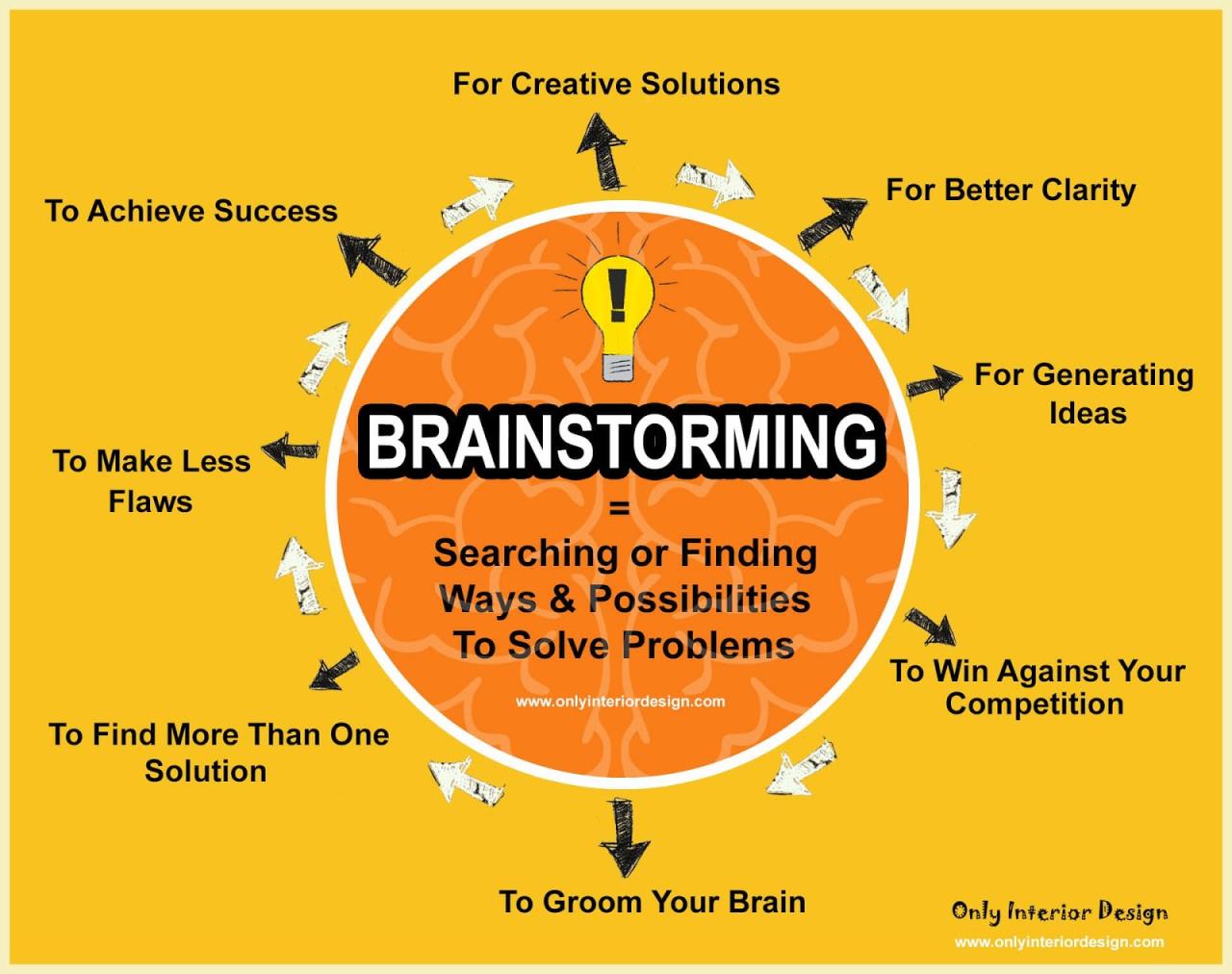
AI is rapidly transforming the way we approach problem-solving and innovation. By leveraging powerful algorithms, AI can generate a vast array of ideas, often exceeding the capacity of human brainstorming sessions. This capability stems from AI’s ability to analyze massive datasets, identify patterns, and extrapolate possibilities in ways that are difficult for humans to replicate. This approach empowers us to explore uncharted creative territories and potentially discover novel solutions to complex problems.AI systems employ a variety of methods to generate ideas, often drawing from vast databases of information.
These techniques go beyond simply searching for existing ideas and aim to create truly novel combinations and interpretations. This unique capability positions AI as a valuable collaborator in creative endeavors, augmenting human ingenuity rather than replacing it.
AI Algorithms for Idea Generation
Various AI algorithms are employed for generating ideas. These algorithms often utilize techniques such as natural language processing (NLP), machine learning (ML), and deep learning (DL). NLP enables AI to understand and process human language, allowing it to comprehend the nuances of different concepts and generate text-based ideas. ML algorithms learn from existing data, identifying patterns and relationships to predict potential ideas.
Deep learning, a subset of ML, allows for more complex pattern recognition and idea generation, often drawing upon vast datasets.
Methods of AI Idea Suggestion
AI employs several methods to propose new ideas. One common method involves combining existing concepts. This is achieved through semantic analysis, identifying relationships and associations between different concepts within a dataset. Another approach leverages knowledge graphs, which represent information as interconnected nodes and edges, allowing AI to trace connections between seemingly disparate ideas. Furthermore, AI can use generative models, which learn the underlying structure of data and then generate new data that adheres to the learned structure.
These models can produce novel text formats, images, or even musical compositions.
Connecting Seemingly Unrelated Concepts
A significant strength of AI in idea generation lies in its ability to identify connections between seemingly unrelated concepts. This capability arises from AI’s capacity to analyze vast amounts of information and discover hidden relationships that might escape human perception. For example, by examining a vast database of scientific literature, AI could potentially identify a link between materials science and architecture, leading to innovative architectural designs utilizing novel materials.
This ability to connect seemingly disparate fields is crucial in fostering cross-disciplinary innovation.
Examples of AI-Generated Ideas Across Different Fields
AI-generated ideas are already making a mark in diverse fields. In marketing, AI can suggest new advertising campaigns based on consumer behavior analysis and trends. In healthcare, AI can suggest novel drug combinations or treatment protocols based on vast medical databases. In the creative arts, AI can generate unique stories, poems, or musical pieces, providing artists with inspiration and alternative perspectives.
Furthermore, AI can generate ideas for new business models in the technology sector.
Comparison of AI Idea Generation Methods
| Method | Description | Strengths | Weaknesses |
|---|---|---|---|
| Concept Combination | AI identifies relationships and associations between existing concepts to generate new ones. | Efficient, often produces diverse ideas. | Reliance on existing data; may not always produce truly novel ideas. |
| Knowledge Graph Approach | AI uses interconnected nodes and edges to trace connections between concepts, fostering cross-disciplinary connections. | Excellent for identifying cross-disciplinary connections; can uncover hidden relationships. | Complexity in constructing and maintaining knowledge graphs can be challenging. |
| Generative Models | AI learns the underlying structure of data and generates new data adhering to that structure. | Potentially generates highly original ideas; adaptable to various data types (text, images, etc.). | May require substantial computational resources; interpretation of the generated ideas can be challenging. |
Utilizing AI for Idea Refinement
AI tools are not just for generating initial ideas; they are increasingly valuable for refining and polishing those concepts. By applying various analytical lenses, AI can significantly enhance the quality and potential impact of brainstorming outputs. This process allows for a more structured and comprehensive evaluation of ideas, leading to more robust and impactful outcomes.AI-powered refinement goes beyond simply suggesting minor tweaks.
It can assess ideas against predefined criteria, identify potential weaknesses, and even suggest alternative approaches, ultimately steering the brainstorming process toward more promising solutions.
Assessing Ideas Against Criteria
AI can objectively evaluate ideas based on predefined criteria, providing a structured approach to refinement. This allows for a more comprehensive understanding of the strengths and weaknesses of each concept, leading to more informed decisions. The process is not subjective; AI’s analysis is based on established metrics and patterns.
Evaluating Ideas Based on Criteria
AI can meticulously evaluate ideas against a range of criteria. These evaluations are not arbitrary; they are derived from analyzing large datasets and identifying correlations between various factors and the success of similar ideas. This allows for a more comprehensive and nuanced understanding of the potential of each concept. By leveraging vast amounts of data, AI can pinpoint areas needing improvement and suggest alternative approaches to overcome limitations.
Providing Feedback on Idea Strength
AI can provide detailed feedback on the strength of ideas, pinpointing areas for improvement. This feedback is not simply a binary “good” or “bad” assessment but rather a detailed breakdown of why an idea might be strong or weak based on specific criteria. The feedback is data-driven, allowing users to understand the rationale behind the assessment and make informed adjustments.
Identifying Potential Flaws or Weaknesses
AI can effectively identify potential flaws or weaknesses in ideas. By analyzing existing data and identifying patterns of failure or success in similar concepts, AI can flag potential pitfalls early in the refinement process. This proactive identification of weaknesses can save time and resources by preventing costly mistakes later on.
Table of Criteria for Evaluating Ideas
| Criteria | Description | Example |
|---|---|---|
| Novelty | The degree to which the idea is original and unique. Does it introduce a new perspective or approach? | A new method for personalized learning, utilizing AI to adapt teaching methods to individual student needs. |
| Feasibility | The practicality and likelihood of successfully implementing the idea. Does it consider resource constraints, technical limitations, and potential obstacles? | A plan to develop a self-driving car fleet for urban delivery. The feasibility analysis would consider factors like infrastructure compatibility, legal regulations, and the availability of drivers. |
| Market Demand | The potential for the idea to resonate with the target audience and generate demand. Does it address a need or solve a problem for the intended users? | A new social media platform that prioritizes privacy and user control. This would assess the desire for greater privacy and control among users. |
| Scalability | The ability to expand the idea’s reach and impact. Can it be implemented on a larger scale without losing effectiveness or efficiency? | An app designed to connect volunteers with local organizations needing assistance. This would look at factors such as volunteer recruitment and organizational management. |
| Sustainability | The long-term viability and environmental impact of the idea. Does it consider the resources needed and the potential environmental consequences? | A new agricultural technique that increases crop yields without increasing pesticide use. This would evaluate its environmental impact and long-term sustainability. |
Collaboration with AI in Brainstorming Sessions
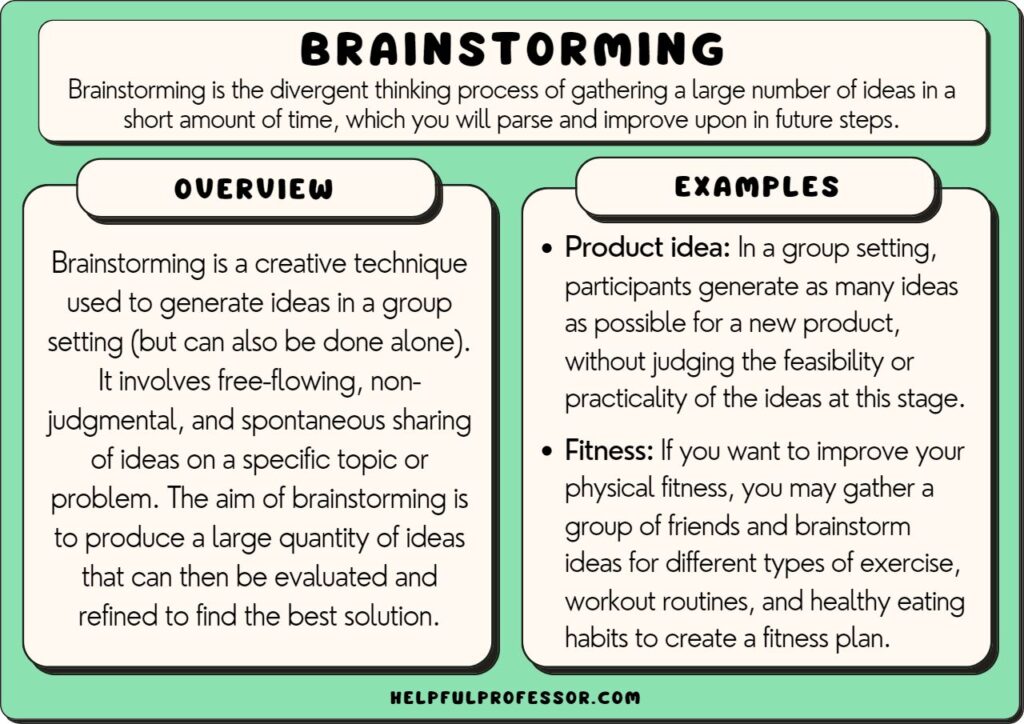
AI significantly enhances collaborative brainstorming sessions by providing a structured platform for idea generation, tracking, and refinement. This collaborative approach fosters creativity and efficiency, allowing multiple users to contribute effectively and leverage AI’s capabilities for more comprehensive insights.AI tools can facilitate the exchange of ideas and encourage active participation from all members of the brainstorming group. This results in a richer pool of ideas and perspectives, leading to more innovative solutions.
The tools can also track and organize the ideas, making it easier to identify connections and patterns that might not be apparent to human participants.
Facilitating Brainstorming Sessions Among Multiple Users
AI-powered platforms facilitate brainstorming sessions by providing a central repository for ideas. Participants can contribute ideas in real-time, regardless of their location. The platform automatically aggregates these contributions, allowing for a shared understanding of the collective input. This fosters a dynamic and inclusive environment where everyone feels empowered to share their thoughts.
Tracking and Organizing Ideas Generated During Brainstorming
AI tools effectively track and organize ideas by categorizing them based on s, themes, or connections. This categorization process aids in identifying trends and patterns that might not be evident through simple observation. Furthermore, AI can prioritize ideas based on factors such as relevance, feasibility, or potential impact, offering valuable insights for the brainstorming team.
Examples of AI Tools Supporting Collaborative Brainstorming
Several AI tools are designed to support collaborative brainstorming. These tools often feature features such as real-time idea input, automated categorization, and prioritization of ideas. Some examples include platforms that use natural language processing (NLP) to analyze the nuances of expressed ideas and suggest related concepts, enhancing the depth and breadth of the brainstorming process.
Managing and Prioritizing Ideas
AI can analyze the generated ideas and provide insights on their potential impact, feasibility, and alignment with project goals. AI-driven prioritization tools can help focus the team’s efforts on the most promising avenues, accelerating the ideation process and optimizing resource allocation. This approach streamlines the brainstorming process, ensuring that valuable time is not wasted on less impactful ideas.
The AI can also track the progress of ideas and provide feedback on their development, ensuring a focused and efficient brainstorming session.
Comparison of Collaboration Platforms with AI
| Platform | Features | User Interface |
|---|---|---|
| Brainstorming Buddy | Real-time idea input, automated categorization, prioritization based on relevance and feasibility, NLP-powered concept suggestion, progress tracking, and feedback on idea development. | Intuitive, user-friendly interface with clear visualization of ideas and their connections. |
| IdeaSpark | Collaborative workspace for idea generation, idea clustering based on semantic similarity, integration with other project management tools, and option for customizable prioritization criteria. | Modern and clean design, providing a clear overview of the entire brainstorming process. |
| InnovateAI | Facilitates brainstorming through a virtual whiteboard-style interface, incorporating AI-powered idea generation suggestions, allows users to visually connect ideas, and provides insights into the potential impact of ideas based on historical data. | Interactive and visually engaging platform, allowing for real-time collaboration and visualization of ideas. |
Overcoming Challenges and Limitations
Leveraging AI for brainstorming offers exciting possibilities, but it’s crucial to acknowledge and address potential challenges. AI systems, while powerful, still lack the nuanced understanding of human creativity and emotional intelligence. Successfully integrating AI into brainstorming processes requires a clear understanding of these limitations and strategic approaches to mitigate them.
Potential Challenges in AI-Powered Brainstorming
AI tools, while adept at generating ideas, may struggle with complex, abstract concepts or those requiring deep contextual understanding. This can lead to the production of irrelevant or nonsensical ideas, particularly when the initial prompts lack sufficient clarity or depth. Furthermore, AI outputs often lack the emotional resonance and human perspective that contribute to truly innovative solutions. Overreliance on AI might stifle genuine human creativity and critical thinking.
Limitations of AI in Understanding Human Creativity
AI models are trained on vast datasets, enabling them to identify patterns and generate text or code that resembles human creativity. However, they often lack the ability to truly grasp the underlying motivations, emotional drivers, and subjective experiences that shape human creativity. AI struggles to understand the “why” behind creative choices, making it difficult to judge the quality or relevance of generated ideas within a specific context.
Mitigating Challenges When Using AI for Brainstorming
Effective mitigation involves clear and concise prompts, incorporating relevant context, and a critical human review process. Providing detailed instructions and specific criteria for the desired output can guide AI to generate more targeted and useful ideas. Human intervention is crucial to evaluate the quality, feasibility, and relevance of the generated ideas within the larger problem context.
Integrating Human Input Effectively with AI
Human input is vital to harness the strengths of AI while overcoming its limitations. A collaborative approach, where humans provide initial prompts, refine AI-generated ideas, and evaluate their feasibility, is ideal. By incorporating human judgment, intuition, and experience, the generated ideas can be refined and tailored to meet the needs of the specific brainstorming session. Humans can also provide emotional and ethical considerations that AI systems often miss.
Practical Tips for Avoiding Common Pitfalls
One critical step is to clearly define the brainstorming goals and desired outcomes. This provides a framework for evaluating the relevance and quality of the AI-generated ideas. Furthermore, diversifying input prompts and encouraging varied perspectives helps to overcome potential biases or limitations in the AI’s training data. Finally, remember that AI is a tool; it’s crucial to maintain human control over the brainstorming process and critically evaluate the generated ideas.
Examples and Case Studies
AI-powered brainstorming is rapidly transforming various industries. Practical applications, demonstrated through case studies, highlight the effectiveness and versatility of this approach. These examples illuminate how AI can enhance creative processes, accelerating innovation and problem-solving.The following sections provide real-world examples of brainstorming with AI, focusing on specific contexts and the demonstrable impact of these integrations. We’ll analyze how AI can contribute to generating creative content across diverse fields, offering valuable insights into its potential for enhancing human ingenuity.
Marketing Campaign Development
AI can significantly enhance marketing campaigns by generating a wide array of ideas and concepts. Tools can analyze existing data, trends, and competitor strategies to produce novel marketing approaches. For instance, an AI tool might suggest personalized ad copy tailored to specific customer segments, leading to improved engagement and conversion rates.
Product Development
AI excels at exploring diverse product concepts and identifying potential improvements. Consider a company developing a new type of fitness tracker. AI can generate design variations, analyze user feedback on prototypes, and even predict market demand for specific features. This data-driven approach can optimize the product development process, leading to more effective and successful products.
Creative Content Generation
AI’s creative potential extends beyond the realm of marketing and product development. AI tools can generate original written content, music, and art. For instance, AI can compose original music pieces in various genres, create personalized stories based on user input, or generate unique visual art styles. The potential for personalized content creation is significant.
Case Study Examples
- A marketing agency used AI to analyze customer data and generate targeted ad campaigns for a client. The results showed a 25% increase in conversion rates compared to traditional methods. This case demonstrates the tangible impact of AI on campaign effectiveness.
- A tech startup employed AI to brainstorm new features for their mobile application. The AI suggested a feature that improved user engagement by 15%. This highlights the efficiency and innovation potential of AI in product development.
- An artist used AI to generate unique visual art styles and themes. The resulting artwork garnered significant attention on social media and art platforms. This showcases the potential of AI to augment artistic expression.
Summary of Case Studies
| Case Study | Context | AI Application | Results |
|---|---|---|---|
| Personalized Ad Campaigns | Marketing | AI analyzed customer data and generated targeted ad copy. | 25% increase in conversion rates. |
| New Mobile App Features | Product Development | AI suggested a feature improving user engagement. | 15% increase in user engagement. |
| Unique Visual Art Styles | Creative Content | AI generated unique visual art styles and themes. | Significant social media and art platform attention. |
Future Trends in AI-Powered Brainstorming
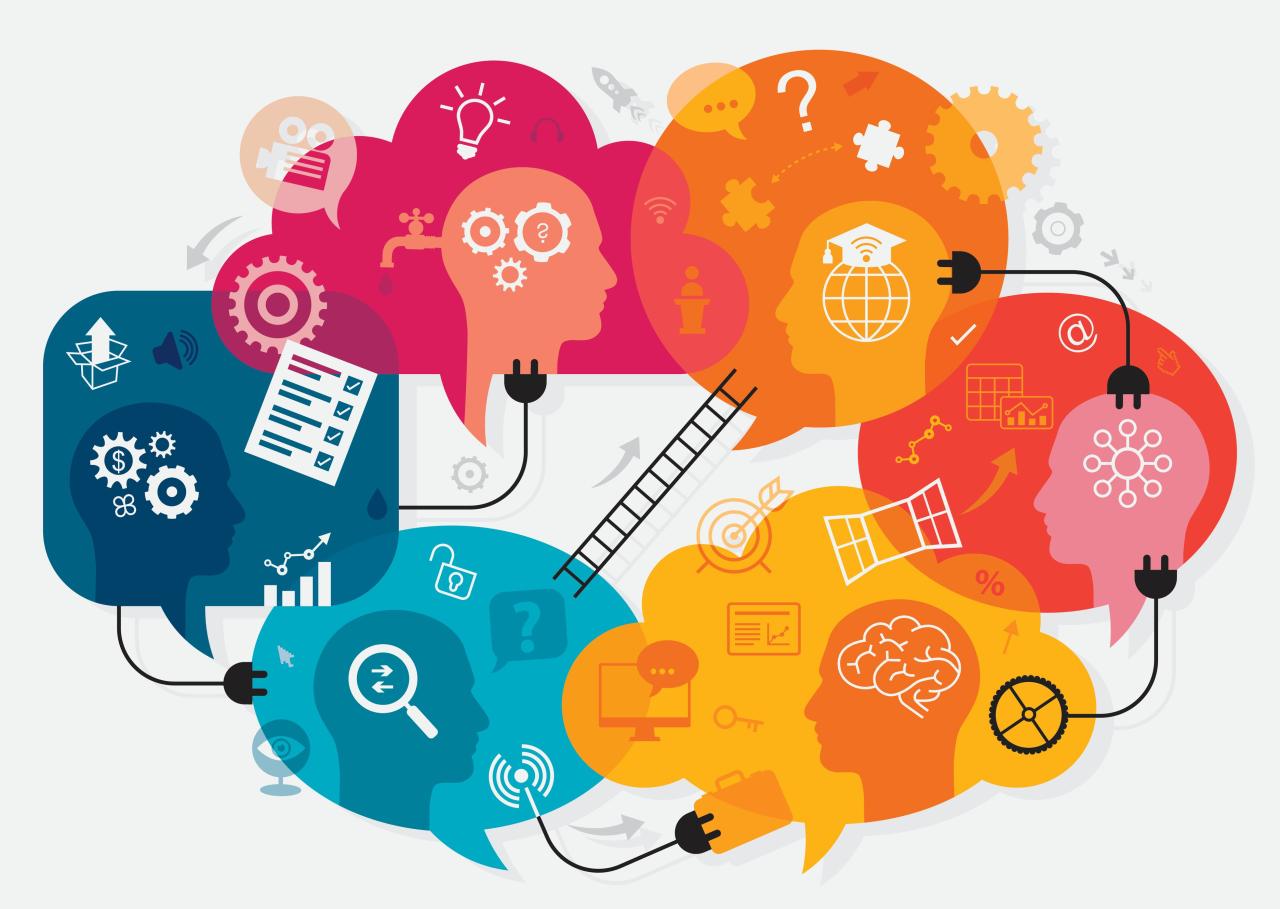
The landscape of brainstorming is rapidly evolving, with artificial intelligence (AI) playing an increasingly significant role. As AI models become more sophisticated, their ability to assist in idea generation, refinement, and collaboration is expanding, promising to revolutionize how we approach problem-solving and innovation. This section explores the emerging technologies shaping the future of AI-powered brainstorming and anticipates the potential impacts on the process.The future of brainstorming is not merely about automating existing methods; it’s about leveraging AI’s unique capabilities to create entirely new paradigms for idea generation and collaboration.
This involves moving beyond simple matching to more nuanced understanding and creative synthesis. The focus is shifting from task completion to active engagement and partnership with AI tools, allowing for more fluid and imaginative brainstorming sessions.
Emerging Technologies in AI for Brainstorming
AI models are constantly improving, leading to more advanced capabilities for brainstorming. Natural Language Processing (NLP) is becoming increasingly adept at understanding and interpreting complex ideas, enabling AI to participate more meaningfully in discussions. For instance, AI can now discern subtle nuances in language, recognizing underlying themes and connections that humans might miss. Machine learning algorithms are also enhancing their ability to predict and suggest new ideas based on patterns and trends identified from vast datasets.
This ability is critical for identifying potential solutions and exploring unconventional approaches.
Potential of AI in Future Brainstorming Processes
AI has the potential to significantly enhance brainstorming processes in several ways. It can automatically generate a wider range of ideas by exploring diverse possibilities, surpassing the limitations of human creativity. AI can also quickly analyze large datasets, identifying hidden correlations and patterns that could lead to novel insights and solutions. Moreover, AI can tailor brainstorming sessions to specific needs and contexts, ensuring that the ideas generated are relevant and practical.
This personalized approach will greatly improve the efficiency and effectiveness of brainstorming sessions.
Evolution of AI’s Creativity and Intuition
AI’s creative abilities are rapidly evolving, moving beyond simple pattern recognition to more sophisticated forms of synthesis and imagination. The future of AI-powered brainstorming will likely see AI models capable of generating more abstract and imaginative ideas. For example, AI can create innovative combinations of existing concepts or generate entirely new concepts based on its understanding of diverse fields.
Furthermore, the development of AI models that can mimic human intuition and emotional responses is an exciting possibility. These models could contribute to a more nuanced and empathetic approach to problem-solving, allowing for more innovative and creative solutions.
Future Outlook for AI-Driven Brainstorming
The future of AI-driven brainstorming is poised for significant growth and transformation. This will involve a shift from using AI as a mere tool to a more collaborative partnership with the technology. The ability to generate, analyze, and refine ideas with AI’s assistance will become increasingly accessible to individuals and organizations across diverse industries. This collaboration will lead to unprecedented innovation and problem-solving capabilities.
A visual representation of this potential could be envisioned as a dynamic network where AI and humans exchange ideas and insights in real-time, creating a collaborative and synergistic environment for creative problem-solving. The result will be a more efficient and effective brainstorming process that leads to more innovative outcomes.
Concluding Remarks

In conclusion, this exploration of AI-powered brainstorming provides a practical framework for harnessing the power of technology to stimulate creativity and drive innovation. By understanding the diverse applications of AI tools and methodologies, individuals and teams can unlock new possibilities for generating, refining, and implementing innovative ideas across various domains. We hope this guide equips you with the knowledge and resources to effectively leverage AI in your brainstorming endeavors.