Welcome to an insightful exploration of how to optimize time management with AI. This guide delves into the transformative capabilities of artificial intelligence in enhancing personal and professional productivity. We will uncover how AI can revolutionize the way we approach tasks, scheduling, and focus, ultimately leading to more efficient and effective time utilization.
Artificial intelligence is rapidly becoming an indispensable ally in the quest for better time management. From intelligent task prioritization and predictive scheduling to minimizing distractions and automating repetitive duties, AI offers a suite of sophisticated tools and techniques. Embracing these advancements can unlock significant benefits, allowing individuals and teams to reclaim valuable hours and achieve their goals with greater ease.
Understanding the Role of AI in Time Management
Artificial intelligence is rapidly transforming how we approach personal and professional productivity, with time management being a key area of impact. AI’s ability to process vast amounts of data, identify patterns, and automate complex tasks offers unprecedented opportunities to reclaim valuable time and enhance efficiency. By leveraging AI, individuals and teams can move beyond traditional methods to achieve a more strategic and optimized use of their most precious resource: time.AI assists in time management by acting as an intelligent assistant, capable of analyzing your habits, predicting future needs, and suggesting optimal ways to allocate your time.
It moves beyond simple scheduling to offer proactive insights and automated solutions that reduce cognitive load and minimize wasted effort. This integration allows for a more dynamic and responsive approach to managing daily tasks, projects, and long-term goals, ultimately fostering a more productive and less stressful environment.
AI-Powered Task Prioritization and Scheduling
One of the most significant contributions of AI to time management lies in its ability to intelligently prioritize and schedule tasks. AI algorithms can analyze the urgency, importance, dependencies, and estimated effort required for each task, then suggest an optimal order for completion. This goes beyond simple to-do lists by factoring in your personal productivity peaks, meeting schedules, and project deadlines to create a dynamic and realistic daily or weekly plan.AI-powered scheduling tools can also adapt to unforeseen changes.
If a meeting runs over or a new urgent task arises, the AI can automatically re-evaluate your schedule and suggest adjustments to minimize disruption and ensure critical items remain on track. This intelligent adaptation reduces the mental overhead of constant rescheduling and helps maintain momentum.
Examples of AI in Time Optimization Tools
The landscape of AI-powered time management tools is diverse and continuously evolving. These tools leverage AI in various ways to enhance efficiency.
- Intelligent Calendar Assistants: Tools like Google Calendar’s “Goals” feature or dedicated AI assistants can automatically find optimal times for tasks and appointments based on your availability and stated priorities. They can also suggest meeting durations and attendees, and even reschedule conflicting appointments.
- Automated Email Management: AI can sort, categorize, and prioritize incoming emails, highlighting urgent messages and drafting responses for common queries. This significantly reduces the time spent sifting through inboxes. Examples include features within Gmail or dedicated AI email clients.
- Project Management Software with AI Insights: Platforms like Asana or Monday.com are increasingly integrating AI to predict project completion times, identify potential bottlenecks, and suggest resource allocation strategies. This helps teams stay ahead of deadlines and manage workloads more effectively.
- Focus and Productivity Apps: AI can analyze your work patterns to identify periods of peak concentration and suggest optimal times for deep work, while also blocking distractions during these periods. Apps may use AI to learn your habits and provide personalized recommendations for breaks and task switching.
- Time Tracking and Analysis Tools: AI can automatically track the time spent on different tasks and applications, providing detailed reports on where your time is going. This data can then be used to identify time sinks and areas for improvement.
Benefits of Integrating AI into Time Management
The adoption of AI in time management strategies offers a multitude of advantages for both individuals and teams, leading to tangible improvements in productivity and well-being.
- Increased Productivity: By automating repetitive tasks, optimizing schedules, and providing intelligent prioritization, AI frees up cognitive resources, allowing individuals to focus on higher-value activities. This leads to a greater volume of accomplished work within the same timeframe.
- Reduced Stress and Burnout: The ability of AI to manage complex schedules, anticipate conflicts, and handle routine tasks significantly reduces the mental burden associated with time management. This can lead to a more balanced workload and a decrease in feelings of overwhelm and burnout.
- Improved Decision-Making: AI provides data-driven insights into time allocation and task performance, enabling more informed decisions about how to spend time and resources. This analytical capability helps in identifying inefficiencies and making strategic adjustments.
- Enhanced Focus and Concentration: AI-powered tools can help create environments conducive to deep work by minimizing distractions and suggesting optimal times for focused effort. This leads to higher quality output and a greater sense of accomplishment.
- Better Work-Life Balance: By making time management more efficient and less stressful, AI can contribute to a healthier work-life balance. When work is managed more effectively, there is often more time available for personal pursuits and relaxation.
“AI doesn’t just manage your time; it helps you understand where your time is most valuable.”
Identifying AI-Driven Time Management Techniques
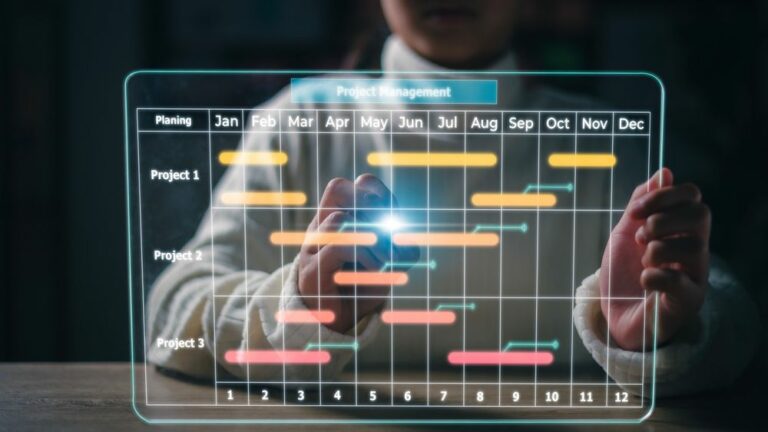
Artificial intelligence is rapidly transforming how we approach productivity, offering sophisticated tools to reclaim our most valuable resource: time. By leveraging AI, individuals and teams can move beyond traditional time management strategies and embrace intelligent, automated solutions. This section explores the practical applications of AI in optimizing daily workflows, enhancing focus, and streamlining complex processes.AI’s ability to analyze patterns, predict outcomes, and automate tasks makes it an invaluable ally in the quest for better time management.
Instead of manual adjustments and constant vigilance, AI offers proactive and adaptive solutions that learn from our habits and preferences. This allows for a more dynamic and effective approach to managing our schedules and responsibilities.
AI-Driven Task Prioritization and Scheduling
Effectively managing tasks is fundamental to time optimization. AI excels at analyzing task dependencies, deadlines, and estimated effort to create optimal schedules that maximize productivity and minimize the risk of missed deadlines. These systems can learn from your past performance and preferences to refine future scheduling.AI-powered tools can analyze the urgency and importance of tasks based on predefined criteria or learned patterns.
They can also consider factors like your energy levels throughout the day, the availability of resources, and the dependencies between tasks. This leads to a dynamic schedule that adapts to changing priorities and unforeseen events.
- Intelligent Calendar Management: AI can automatically schedule meetings by finding optimal times that accommodate all participants, considering their existing commitments and preferences. It can also reschedule conflicting appointments with minimal user intervention.
- Dynamic Task Sequencing: Based on real-time data and priority shifts, AI can reorder your to-do list to ensure you’re always working on the most critical items. This prevents lower-priority tasks from consuming valuable time when urgent matters arise.
- Predictive Scheduling: Some AI tools can predict how long certain tasks will take based on your historical data, helping to create more realistic and achievable daily schedules.
- Context-Aware Prioritization: AI can factor in the context of your work, such as upcoming project deadlines or client demands, to dynamically adjust task priorities.
AI Techniques for Minimizing Distractions and Enhancing Focus
In today’s hyper-connected world, distractions are a major impediment to productivity. AI offers intelligent solutions to filter out noise, manage notifications, and create an environment conducive to deep work. These techniques help users maintain concentration and achieve flow states more effectively.AI can learn your work patterns and identify periods when you are most productive, then proactively shield you from interruptions during these times.
It can also help you identify your personal distraction triggers and suggest strategies to mitigate them.
- Smart Notification Filtering: AI can learn which notifications are genuinely important and which can wait, delivering them only when you are not engaged in a focused task. This prevents constant interruptions from emails, messages, and social media alerts.
- Focus Mode Automation: AI can automatically activate “do not disturb” modes on your devices when it detects you are engaged in deep work, based on your calendar or application usage.
- Distraction Blocking: AI-powered browser extensions and applications can identify and block distracting websites or applications during designated work periods.
- Personalized Work Environment: Some AI tools can suggest optimal times for focused work based on your productivity patterns and even recommend ambient sounds or music known to enhance concentration.
AI Automation of Repetitive Time-Consuming Activities
Many daily tasks are mundane and repetitive, consuming valuable cognitive energy and time that could be better spent on more strategic activities. AI excels at automating these processes, freeing up individuals to concentrate on higher-value work.By analyzing your workflows, AI can identify recurring patterns and automate them, ranging from simple data entry to more complex communication sequences. This not only saves time but also reduces the likelihood of human error.
- Email Management: AI can sort, categorize, and even draft responses to routine emails, significantly reducing the time spent managing your inbox.
- Data Entry and Processing: AI-powered tools can extract information from documents, spreadsheets, and other sources, automating data entry and reducing manual processing time.
- Report Generation: AI can gather data from various sources and automatically generate reports, saving hours of manual compilation and formatting.
- Workflow Automation: AI can be used to automate multi-step processes, such as onboarding new clients or employees, by triggering a series of predefined actions.
AI-Powered Approaches for Better Meeting Management
Meetings can be a significant drain on time if not managed effectively. AI offers innovative solutions to optimize meeting scheduling, participation, and follow-up, ensuring that these sessions are productive and achieve their intended outcomes.AI can analyze meeting data, participant engagement, and action items to provide insights and automate tasks that typically fall outside the core meeting time. This leads to more efficient and impactful meetings.
- Intelligent Meeting Scheduling: As mentioned, AI can find the best times for meetings, considering attendees’ availability, time zones, and even preferences for meeting duration.
- Automated Meeting Summaries: AI-powered transcription services can record meetings and then generate concise summaries, highlighting key decisions and action items.
- Action Item Tracking: AI can identify action items mentioned during a meeting and automatically assign them to individuals, setting reminders and deadlines.
- Meeting Effectiveness Analysis: Some AI tools can analyze meeting transcripts and participant engagement to provide feedback on meeting efficiency and suggest improvements for future sessions.
- Pre-Meeting Preparation: AI can curate relevant documents and information for attendees before a meeting, ensuring everyone is well-prepared and saving valuable discussion time.
Leveraging AI for Enhanced Productivity and Efficiency

Artificial Intelligence (AI) offers powerful capabilities to move beyond basic time management and unlock significant gains in personal productivity and overall efficiency. By analyzing your unique work habits and patterns, AI can provide personalized insights and actionable strategies to help you make the most of your time, reduce wasted effort, and achieve your goals more effectively. This section delves into how you can harness AI to optimize your workflow and boost your output.AI’s ability to process vast amounts of data and identify subtle trends makes it an invaluable tool for understanding where your time is truly going.
This self-awareness is the first step towards making meaningful improvements. Furthermore, AI can proactively assist in structuring your day, anticipating your needs, and adapting to your evolving work style, leading to a more streamlined and productive experience.
AI-Driven Analysis of Personal Productivity Patterns
Understanding your personal productivity patterns is crucial for effective time management. AI excels at dissecting your daily activities, identifying periods of peak performance, and pinpointing areas where time is being lost or inefficiently used. By analyzing data from your digital tools, such as calendar entries, task lists, communication logs, and even application usage, AI can generate a comprehensive overview of your work habits.This analysis goes beyond simple time tracking.
AI can identify recurring distractions, estimate the time spent on unproductive tasks, and highlight the correlation between certain activities and your overall output. For instance, an AI tool might notice that you tend to be most productive in the morning for deep work, but your afternoons are often fragmented by meetings and email responses. It can also identify “time sinks” – activities that consume a disproportionate amount of time with little tangible return.Here are key ways AI helps analyze productivity patterns:
- Activity Logging and Categorization: AI can automatically log the applications and websites you use, categorizing them into productive, unproductive, or neutral activities based on predefined rules or your learned preferences.
- Performance Trend Identification: By correlating task completion times with specific times of day, days of the week, or even your energy levels (if tracked), AI can reveal your most and least productive periods.
- Distraction Analysis: AI can identify common sources of interruption, such as frequent notifications from social media or excessive time spent on non-work-related websites during work hours.
- Task Complexity Estimation: AI can learn to estimate the time required for different types of tasks based on your past performance, helping you to set more realistic deadlines.
- Contextual Awareness: Advanced AI can even infer your current focus based on the applications you’re using and the types of tasks you’re engaged in, providing more accurate insights into your workflow.
AI-Powered Workload Prediction and Optimal Work-Rest Cycles
One of the significant challenges in time management is accurately predicting workload and managing energy levels. AI can provide data-driven predictions about your upcoming tasks and suggest optimal work-rest cycles to maintain peak performance and prevent burnout. By learning from your historical data, project timelines, and even external factors like meeting schedules, AI can forecast periods of high and low demand.This predictive capability allows for proactive planning.
If AI predicts a surge in workload, it can prompt you to start prioritizing and delegating tasks earlier. Conversely, during lulls, it can suggest opportunities for skill development or strategic planning. Crucially, AI can also recommend personalized work-rest intervals, recognizing that sustained focus is often less effective than strategically timed breaks.AI’s approach to workload prediction and work-rest cycles includes:
- Forecasting Task Volume: Based on project deadlines, recurring tasks, and incoming requests, AI can estimate the total volume of work for a given day, week, or month.
- Identifying Bottlenecks: By analyzing dependencies between tasks and potential delays, AI can flag upcoming bottlenecks that might impact your schedule.
- Recommending Work Blocks: AI can suggest dedicated blocks of time for focused work, minimizing interruptions during these periods.
- Optimizing Break Schedules: Drawing on research into cognitive fatigue and productivity, AI can recommend when to take short breaks, longer breaks, or even suggest activities for those breaks to refresh your mind. For example, an AI might suggest a 5-minute walk after 90 minutes of intense concentration, or a 15-minute break for stretching after a prolonged coding session.
- Adapting to Energy Fluctuations: Some AI systems can integrate with wearable devices to track physiological data, suggesting work types that align with your current energy levels.
Consider the example of a project manager using an AI tool. The AI, analyzing past project completion times, team availability, and the complexity of upcoming tasks, might predict a particularly demanding week two weeks from now. It could then alert the project manager to start assigning tasks, confirming resource availability, and potentially rescheduling less critical meetings for that period, thus preventing a last-minute scramble.
Personalized Workflows and Adaptation to Individual Working Styles
A one-size-fits-all approach to time management rarely works. AI’s strength lies in its ability to learn and adapt to your unique working style, preferences, and even your cognitive strengths and weaknesses. This personalization ensures that time management strategies are not just theoretical but practical and effective for – you*.AI can observe how you interact with your tools, the types of tasks you gravitate towards, and the methods you use to complete them.
Based on this, it can suggest personalized workflows that align with your natural inclinations. This might involve recommending specific organizational structures for your digital files, suggesting the best times for certain types of communication, or even adapting the interface of your productivity tools to better suit your needs.The personalization capabilities of AI include:
- Task Sequencing: AI can learn your preferred order for tackling tasks and suggest a daily schedule that optimizes for your flow, perhaps by grouping similar tasks or placing challenging ones during your peak performance hours.
- Tool Integration: AI can intelligently integrate with your existing suite of tools, ensuring seamless data flow and reducing manual input. For example, an AI might automatically create calendar events from email requests or add action items from meeting notes to your task list.
- Notification Management: AI can learn which notifications are critical and which can be deferred, filtering out distractions and ensuring you only receive alerts when they truly matter.
- Learning Your Preferences: Over time, AI can learn your preferences for communication channels (e.g., preferring Slack for quick questions, email for detailed discussions) and task management methods (e.g., Kanban boards vs. to-do lists).
- Adaptive Scheduling: If your schedule is frequently disrupted by unexpected events, AI can learn to build in buffer times or suggest alternative task arrangements dynamically.
For instance, a freelance writer might find that AI suggests scheduling their creative writing sessions for early mornings, followed by administrative tasks in the afternoon, and then dedicated time for client communication before winding down. This is a direct result of the AI observing their past productivity peaks and successful task completion patterns.
AI-Driven Strategies for Delegating Tasks Effectively
Delegation is a cornerstone of efficient time management, but it can be challenging to know what, when, and to whom to delegate. AI can significantly enhance this process by providing objective insights and data-driven recommendations, transforming delegation from an art into a more strategic science.By analyzing the skills and capacity of your team members, the complexity of tasks, and your own current workload, AI can identify optimal delegation opportunities.
It can suggest which tasks are suitable for delegation, recommend the most appropriate individuals based on their expertise and availability, and even help in defining the scope and expectations for delegated tasks.AI-driven delegation strategies involve:
- Task Suitability Assessment: AI can analyze task requirements (e.g., skill level, time commitment, criticality) and compare them against the profiles of team members to determine if delegation is appropriate.
- Team Member Skill Matching: AI can maintain a database of team members’ skills, experience, and past performance on similar tasks, recommending individuals best suited for specific assignments.
- Workload Balancing: AI can monitor the current workload of team members and suggest delegation in a way that distributes tasks equitably, preventing overload for any single individual.
- Identifying Bottlenecks for Delegation: If AI identifies a task that is holding up progress and you are the sole person capable of performing it, it can strongly recommend delegating it if possible, or highlight the need for additional resources.
- Defining Delegation Parameters: AI can assist in setting clear objectives, deadlines, and required outcomes for delegated tasks, ensuring clarity and reducing the likelihood of miscommunication.
Imagine a team leader using an AI tool. The AI analyzes an upcoming project, noting that several coding tasks require specific expertise in a particular programming language. It then cross-references this with the team’s current task assignments and individual skill sets, identifying two developers who are not only proficient in that language but also have available bandwidth. The AI might then suggest delegating specific coding modules to each of them, along with estimated completion times, thereby streamlining the project execution.
Practical Implementation of AI in Time Optimization

Integrating Artificial Intelligence into your daily workflow for time management is a strategic move that can significantly enhance productivity. This section will guide you through the essential steps for selecting, implementing, and optimizing AI-powered time management solutions, ensuring a smooth transition and maximizing the benefits. We will cover everything from initial tool selection to overcoming common adoption hurdles and measuring the tangible impact on your efficiency.The effective use of AI in time management hinges on a systematic approach.
By following a structured process, you can ensure that the chosen AI tools align with your specific needs and are seamlessly woven into your existing routines. This not only helps in saving time but also in cultivating more efficient work habits.
Selecting and Integrating AI Time Management Tools
Choosing the right AI tool is the foundational step towards successful time optimization. This involves understanding your personal or team’s workflow, identifying specific pain points in time management, and then matching these requirements with the capabilities of available AI solutions. The integration process should be gradual, allowing for adaptation and learning.Here is a step-by-step procedure for selecting and integrating AI time management tools:
- Assess Your Current Time Management Needs: Before exploring any tools, conduct a thorough audit of how you currently spend your time. Identify recurring tasks, time sinks, areas of inefficiency, and your primary time management challenges. This might involve using a time-tracking app for a week or two.
- Identify Specific AI Capabilities Required: Based on your assessment, pinpoint the AI features that would be most beneficial. Examples include automated scheduling, task prioritization, meeting summarization, intelligent reminders, or predictive analytics for workload management.
- Research and Shortlist AI Tools: Explore the market for AI-powered time management software. Look for tools that offer the specific features you identified. Consider user reviews, expert opinions, and case studies to gauge their effectiveness and reliability. Popular categories include AI assistants, project management tools with AI features, and smart calendar applications.
- Trial and Evaluate Potential Tools: Most AI tools offer free trials. Utilize these to test the shortlisted options within your actual work environment. Assess ease of use, accuracy of AI predictions, integration capabilities with your existing software stack (e.g., email, calendar, CRM), and the quality of customer support.
- Develop an Integration Plan: Once a tool is selected, create a plan for its integration. This should include defining clear objectives for using the tool, setting a realistic timeline for adoption, and identifying key personnel who will be involved.
- Phased Rollout and Training: Implement the AI tool gradually, perhaps starting with a pilot group or a specific set of tasks. Provide comprehensive training to yourself and your team on how to use the tool effectively. Emphasize the benefits and encourage active participation.
- Monitor and Iterate: Continuously monitor the tool’s performance and gather feedback. Be prepared to make adjustments to your usage or even re-evaluate the tool if it’s not meeting expectations. AI tools often improve with more data and user interaction.
Overcoming Common Challenges in AI Adoption
The transition to AI-assisted time management, while promising, can present obstacles. Recognizing these challenges and having strategies to address them is crucial for a successful and sustained implementation. These hurdles often relate to user resistance, technical integration, and the learning curve associated with new technologies.Actionable advice for overcoming common challenges when adopting AI for time management includes:
- Address User Skepticism and Resistance: Clearly communicate the benefits of AI tools, focusing on how they can reduce workload and improve efficiency rather than replace human oversight. Involve users in the selection and testing process to foster a sense of ownership and reduce anxiety.
- Ensure Seamless Technical Integration: Prioritize AI tools that offer robust integration capabilities with your existing software ecosystem. If direct integration is not possible, explore middleware solutions or APIs. Invest time in understanding the technical requirements and potential compatibility issues.
- Manage the Learning Curve: Provide adequate training and resources. Break down complex features into manageable steps. Encourage peer-to-peer learning and create a supportive environment where users feel comfortable asking questions and experimenting.
- Maintain Data Privacy and Security: Understand the data privacy policies of any AI tool you adopt. Ensure that sensitive information is handled securely and in compliance with relevant regulations. Choose tools from reputable providers with strong security protocols.
- Avoid Over-Reliance and Maintain Human Judgment: AI tools are aids, not replacements for critical thinking. Teach users to critically evaluate AI outputs and to exercise their own judgment, especially in complex or nuanced situations. The goal is augmentation, not automation of all decisions.
- Set Realistic Expectations: AI tools are not magic bullets. They require time to learn, adapt, and provide optimal results. Set achievable goals for what the AI can accomplish and celebrate incremental successes.
Configuring AI Assistants for Maximum Time-Saving Benefits
AI assistants, such as virtual assistants or intelligent scheduling bots, can be powerful allies in reclaiming your time. Their effectiveness, however, is directly tied to how well they are configured and tailored to your specific needs and preferences. A well-configured AI assistant can automate routine tasks, manage communications, and proactively suggest time-saving actions.The process of setting up and configuring AI assistants for maximum time-saving benefits involves several key steps:
- Define Core Responsibilities: Clearly Artikel the primary tasks you want the AI assistant to handle. This could range from managing your calendar and scheduling meetings to filtering emails, transcribing notes, or even drafting basic responses.
- Grant Necessary Permissions: For an AI assistant to function effectively, it will require access to certain applications and data, such as your calendar, email, contacts, and possibly project management tools. Ensure you understand the permissions requested and grant only those that are essential for its operation.
- Personalize Settings and Preferences: Most AI assistants allow for personalization. Configure your preferred meeting durations, buffer times between appointments, working hours, communication style, and preferred channels for notifications. The more personalized the settings, the more accurate and helpful the assistant will be.
- Train the AI on Your Habits and Priorities: Many AI assistants learn from your behavior. Actively use the assistant and provide feedback on its suggestions. For example, if the AI suggests a meeting time that conflicts with your established focus blocks, correct it. Over time, it will learn to respect your priorities.
- Integrate with Other Tools: Connect your AI assistant with other productivity tools you use, such as your CRM, project management software, or note-taking applications. This allows for a more holistic view of your schedule and tasks, enabling the AI to make more informed suggestions.
- Set Up Intelligent Notifications and Reminders: Configure the AI assistant to provide timely and relevant notifications. This might include reminders for upcoming tasks, alerts about potential scheduling conflicts, or summaries of your day. Customize the frequency and type of notifications to avoid being overwhelmed.
- Regularly Review and Refine: AI assistants are not set-it-and-forget-it tools. Periodically review the assistant’s performance, identify areas where it could be more helpful, and adjust its configuration accordingly. As your work habits evolve, so too should your AI assistant’s settings.
Measuring the Impact of AI on Overall Time Efficiency
To truly understand the value of AI in time management, it is essential to quantify its impact. This involves establishing baseline metrics before implementation and then tracking changes over time. Measuring efficiency allows for informed decisions about tool adoption, configuration, and future investments in AI technology.The process of measuring the impact of AI on overall time efficiency involves the following steps:
| Metric | Description | Measurement Method | Pre-AI Baseline | Post-AI Measurement | Impact Analysis |
|---|---|---|---|---|---|
| Time Spent on Administrative Tasks | Hours dedicated to non-core, administrative activities like scheduling, data entry, or email management. | Time tracking software, manual logs, or AI tool usage reports. | [e.g., 10 hours/week] | [e.g., 5 hours/week] | Reduction in administrative overhead. |
| Task Completion Rate | The percentage of planned tasks completed within a given period (e.g., daily, weekly). | Project management software, to-do lists, or task management tools. | [e.g., 75%] | [e.g., 90%] | Improved productivity and output. |
| Meeting Efficiency | Time saved through optimized scheduling, reduced meeting duration, or AI-generated summaries. | Calendar data, meeting attendance logs, and time spent in meetings. | [e.g., 5 hours/week in meetings] | [e.g., 3 hours/week in meetings] | More effective use of collaborative time. |
| Response Time to Inquiries | Average time taken to respond to emails, messages, or client requests. | Email client analytics, communication platform logs. | [e.g., 4 hours] | [e.g., 1 hour] | Enhanced responsiveness and customer satisfaction. |
| Work-Life Balance Perception | Subjective assessment of stress levels and personal time availability. | Surveys, feedback forms, or qualitative interviews. | [e.g., Low satisfaction] | [e.g., High satisfaction] | Improved employee well-being and reduced burnout. |
When analyzing the data, look for trends and significant improvements. For instance, if AI-powered scheduling reduced time spent coordinating meetings by an average of 2 hours per week, this is a quantifiable win. Similarly, an increase in task completion rate from 75% to 90% indicates a substantial boost in efficiency.
“What gets measured gets managed.”Peter Drucker. This principle is vital when implementing AI for time management, as objective data provides the clearest picture of success.
Future Trends in AI-Assisted Time Management
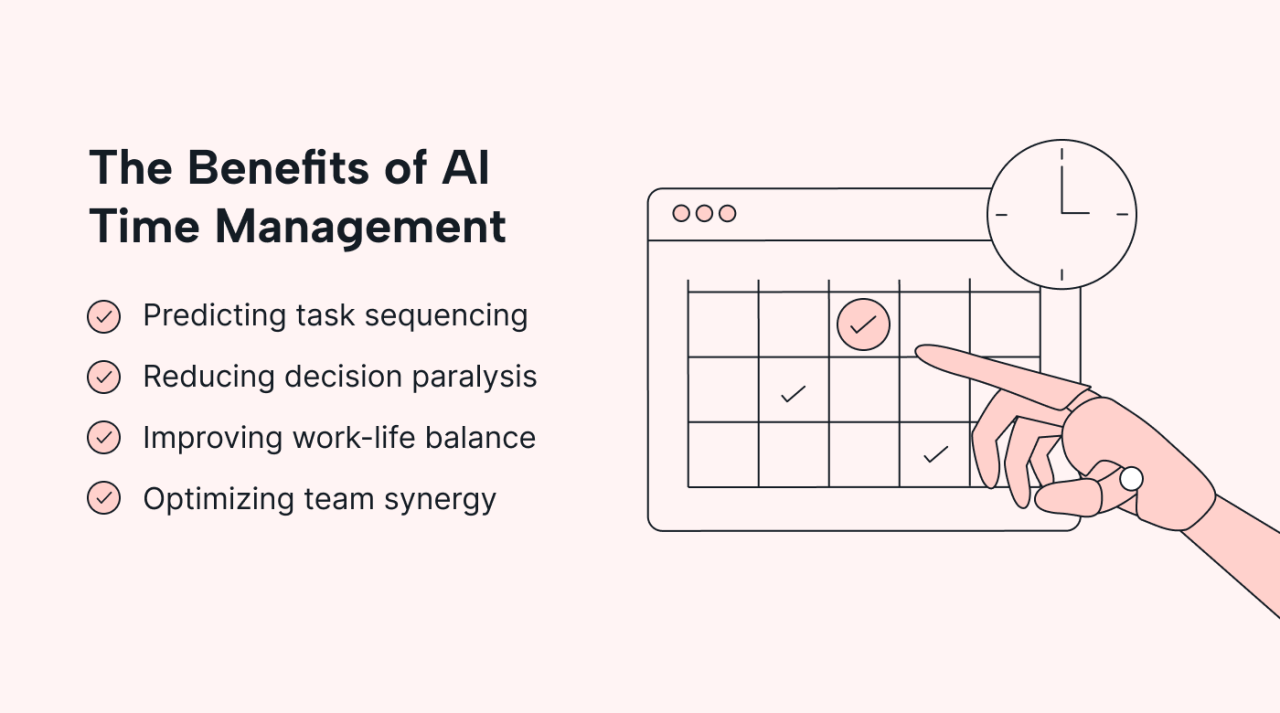
As AI continues its rapid evolution, the landscape of time management is poised for even more profound transformations. We are moving beyond simple task automation and scheduling towards a future where AI acts as an intelligent, proactive partner in optimizing our lives. This section explores the exciting frontiers of AI in time management, from groundbreaking new technologies to the crucial ethical considerations that will guide their implementation.The integration of AI into our daily routines promises a future where time is not just managed, but masterfully orchestrated.
Imagine AI systems that not only understand your schedule but also your energy levels, cognitive load, and even your personal goals, dynamically adjusting your day for peak performance and well-being. This forward-looking perspective highlights how AI will fundamentally reshape our understanding and utilization of productivity.
Emerging AI Technologies Revolutionizing Time Management
Several cutting-edge AI technologies are on the horizon, set to redefine how we approach time management. These advancements go beyond current capabilities, offering deeper insights and more sophisticated automation.
- Advanced Predictive Analytics: AI will become exceptionally adept at forecasting task durations, potential bottlenecks, and even personal energy fluctuations. This allows for more realistic scheduling and proactive adjustments before issues arise. For instance, an AI might analyze your past performance on similar coding tasks, factoring in the complexity of the current project and your typical focus periods, to provide a highly accurate time estimate, far beyond manual estimation.
- Context-Aware AI Assistants: Future AI assistants will possess a much richer understanding of your environment, current tasks, and emotional state. This allows them to offer contextually relevant suggestions and interventions. An AI might notice you’ve been staring at a complex problem for a while and suggest a short break, or it could identify that you’re about to enter a deep work session and automatically silence non-urgent notifications across all your devices.
- Generative AI for Workflow Optimization: Generative AI, capable of creating new content, will be instrumental in streamlining complex workflows. This could involve AI automatically drafting meeting summaries, generating project proposals based on key inputs, or even creating personalized learning plans to acquire new skills needed for upcoming tasks. For example, an AI could take a set of bullet points for a marketing campaign and generate a full draft of social media posts, email newsletters, and ad copy.
- Neuro-AI Integration: While still in early stages, the potential for AI to interpret brain signals could lead to highly personalized time management. This could involve AI understanding when you are most alert and focused, and then optimally scheduling demanding tasks during those periods.
Advancements in AI for Intuitive and Proactive Time Optimization
The next wave of AI in time management will focus on making optimization feel effortless and anticipatory, rather than reactive. These advancements aim to embed intelligence so deeply that it becomes an almost invisible, yet incredibly powerful, force.AI systems are evolving to anticipate needs before they are explicitly stated. This means moving from a system that responds to commands to one that understands your intentions and proactively offers solutions.
- Proactive Scheduling and Rescheduling: AI will not just schedule your day but actively manage it. If a meeting runs over, the AI will automatically adjust subsequent appointments, notify relevant parties, and suggest alternative times for any impacted activities, all without user intervention. Consider a scenario where an unexpected client call extends by 30 minutes; the AI would immediately push back your next scheduled meeting, block out a buffer for travel or preparation for the following one, and send an updated calendar invite to the next participant.
- Cognitive Load Management: AI will monitor your cognitive load and suggest breaks or task shifts to prevent burnout. By analyzing your work patterns, task complexity, and even biometric data (if available and consented to), AI can identify when your focus is waning and recommend a change of activity or a period of rest. For example, after a long period of intense coding, an AI might suggest a brief walk or a quick mindfulness exercise.
- Personalized Productivity Nudges: AI will learn your unique productivity triggers and patterns, providing personalized “nudges” at the optimal moments. These nudges could be reminders to start a specific task, suggestions to switch to a different type of work, or even motivational prompts tailored to your preferences. If an AI notices you consistently perform best on creative tasks in the morning, it might prompt you to tackle a brainstorming session first thing.
- Automated Task Decomposition and Prioritization: For complex projects, AI will be able to break them down into smaller, manageable steps and assign priorities based on deadlines, dependencies, and your overall goals. This significantly reduces the mental overhead of project planning. An AI could take a large research project and automatically generate a series of sub-tasks, estimate the time needed for each, and suggest an optimal order of completion.
Ethical Considerations and Best Practices for AI Time Management
As AI becomes more integrated into our personal and professional lives, addressing the ethical implications is paramount. Responsible development and usage will ensure that AI enhances, rather than compromises, our autonomy and well-being.The power of AI in time management brings with it significant ethical responsibilities. Ensuring fairness, transparency, and user control is crucial for building trust and maximizing the benefits of these technologies.
- Data Privacy and Security: AI time management tools often require access to sensitive personal and professional data. Robust security measures and transparent data usage policies are essential to protect user information from breaches and misuse. Users must have clear understanding of what data is collected, how it is used, and who has access to it.
- Algorithmic Bias: AI algorithms can inadvertently perpetuate existing biases if not carefully designed and monitored. This could lead to unfair prioritization of tasks or opportunities based on protected characteristics. Continuous auditing and diverse training data are vital to mitigate these risks. For example, an AI designed to recommend professional development opportunities should not inadvertently favor certain demographics over others.
- Autonomy and Over-Reliance: While AI can greatly assist, it’s important to maintain human oversight and decision-making. Over-reliance on AI could diminish critical thinking skills and the ability to adapt to unforeseen circumstances. Users should be encouraged to review and, if necessary, override AI suggestions. The goal is augmentation, not abdication of responsibility.
- Transparency and Explainability: Users should understand why an AI is making certain recommendations. “Black box” algorithms can be problematic. Striving for explainable AI (XAI) allows users to trust the system and learn from its insights, fostering a collaborative relationship rather than a purely directive one. When an AI suggests a significant schedule change, it should be able to articulate the reasoning behind it.
- Fairness in Workload Distribution: In team settings, AI should be used to ensure equitable task distribution, not to unfairly burden individuals. AI tools designed for team productivity must consider individual capacities and workload balance.
The Future of Productivity Shaped by AI
The ongoing integration of AI into time management will fundamentally reshape the future of productivity, leading to unprecedented levels of efficiency and a more balanced approach to work and life.AI is not just a tool for managing time; it is becoming a catalyst for redefining what it means to be productive. This evolution promises a future where work is more aligned with human capabilities and aspirations.
- Hyper-Personalized Workflows: Future AI systems will create deeply personalized work environments and workflows tailored to individual strengths, learning styles, and peak performance times. This will move away from one-size-fits-all approaches to a highly adaptive and responsive model. Imagine an AI that customizes your entire digital workspace, from the applications it highlights to the notifications it allows, based on your current task and energy levels.
- Seamless Human-AI Collaboration: The distinction between human and AI contributions will blur. AI will act as an intelligent collaborator, handling repetitive tasks, providing insights, and even co-creating solutions, freeing humans to focus on creativity, strategy, and complex problem-solving. This could manifest in AI partners that can brainstorm ideas, draft initial responses, and even identify potential flaws in human-generated strategies.
- Proactive Well-being Integration: Productivity will be increasingly viewed through the lens of holistic well-being. AI will proactively monitor and support mental and physical health, recognizing that true productivity stems from a healthy and balanced individual. AI might suggest micro-breaks, recommend exercises, or even help manage stress by adjusting workloads or providing mindfulness prompts.
- Continuous Learning and Skill Development: AI will facilitate continuous learning by identifying skill gaps relevant to future tasks and proactively recommending personalized training modules or resources. This ensures individuals and organizations remain agile and competitive in a rapidly changing world. For instance, an AI might notice a project requiring a specific new software skill and immediately suggest online courses or tutorials to bridge that gap.
- Redefinition of Work-Life Integration: AI will enable a more fluid and integrated approach to work and life, allowing for greater flexibility and autonomy. By optimizing tasks and schedules, AI can help individuals reclaim time for personal pursuits, family, and leisure, leading to a more fulfilling and sustainable lifestyle. The goal is not just to get more done, but to live a more enriched life.
Ending Remarks
In conclusion, the integration of AI into our time management strategies presents a powerful pathway to enhanced productivity and efficiency. By understanding and leveraging AI-driven techniques, we can not only optimize our daily routines but also prepare for a future where intelligent systems play an even more significant role in shaping how we work and live. The journey towards mastering time management with AI is an exciting one, promising a more focused, productive, and balanced future.